
Here’s why Sacramento’s COVID vaccine rollout has been so slow
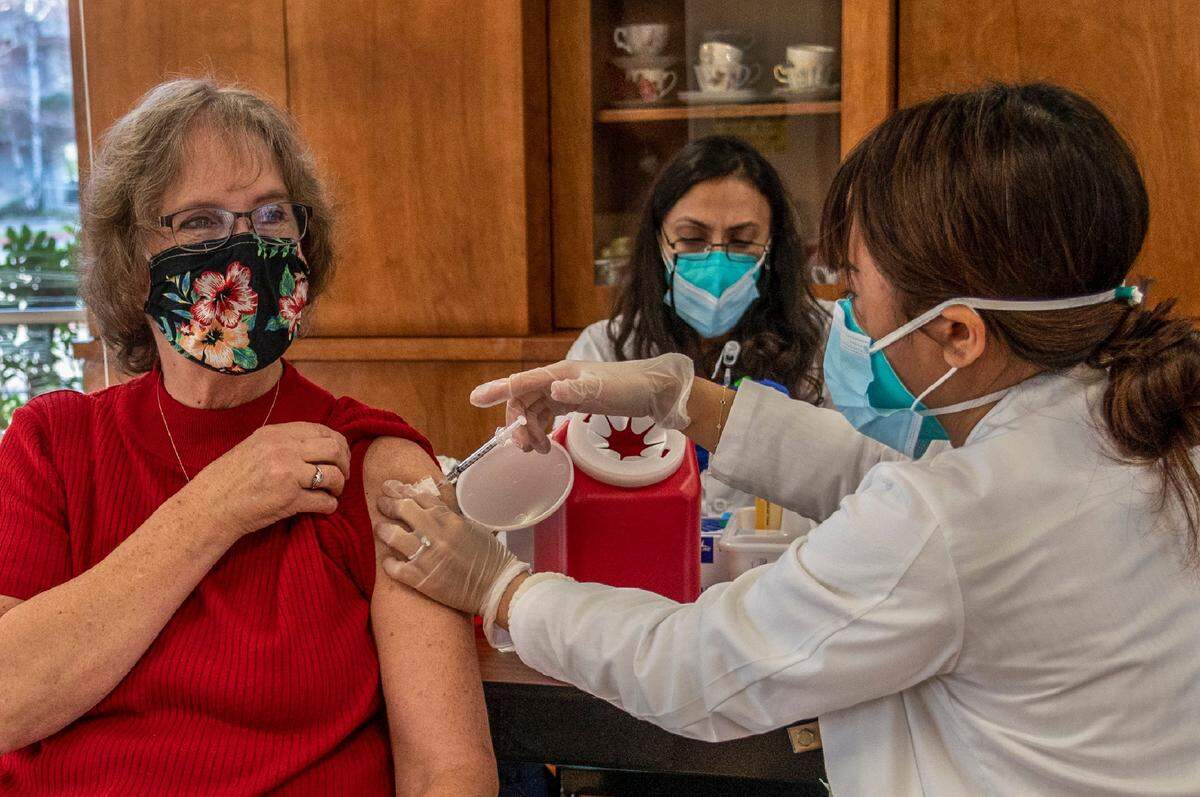
Cindy Mallory, a 71-year-old resident of the Pioneer House senior living facility in downtown Sacramento, finally got what she’s wanted more than anything this past month — a coronavirus vaccine shot.
“This is going to be the start to the end of this insanity,” the former Army nurse said Tuesday. “I feel privileged to be getting the vaccination. I have no desire to get this virus.”
So far, though, Mallory is among a tiny minority.
Three weeks after a UC Davis Health nurse got the first dose of the coronavirus vaccine in Sacramento County, only a few thousand people in the county have been inoculated.
Instead, state and local health officials have been slow to ramp up the vaccination roll out as they strain to assemble a mass distribution system amid major uncertainties. The slow pace has alarmed and angered some, and put health officials on the defensive.
In Sacramento County, health officials say they’ve received only limited shipments of vaccine doses and they are being cautious. As the public health department prepares to bring more vaccination sites online, they are wrestling with a lack of concrete guidelines from the state and uncertainty about when they will get more doses or how many.
The effort is essentially being managed on the fly, with changing information on a weekly basis, said Sacramento County Health Officer Dr. Olivia Kasirye. Nearly a month after federal approval of the first vaccines, the county is still lining up clinics and other private partners to will help conduct the inoculations.
“We are still working through the logistics,” Kasirye said on Tuesday. “We are more or less just getting up and running.”
The Sacramento vaccine distribution region, made up of 11 counties totaling more than two million residents, had received 103,000 doses as of early last week, according to state data. Of those, only 23,685 had been given out, focused on front-line health care workers at hospitals that treat COVID-19 patients.
California COVID vaccination numbers
Gov. Gavin Newsom acknowledged this week the pace is too slow statewide, but described the system as a flywheel, difficult to get started and up to speed, but able to run at high speeds later.
The governor said Monday that about 454,000 shots had been administered statewide — a bit more than 1% of California’s population and considerably fewer than he initially predicted. The governor in early December said the state expected to receive 2.16 million doses, between Pfizer-BioNTech and Moderna’s vaccines, by the end of 2020. California had received 1,762,900 as of the week of Dec. 28, according to a state data chart.
A separate tally published Tuesday by the Bloomberg data analysis group puts the California dosage shipment number at 2 million, with 457,000 doses administered to people.
Sacramento County has received 42,525 of those doses, according to a state data table. Several thousand doses have been administered to nurses, doctors and other health care workers at major hospitals, including UC Davis Medical Center, Kaiser Permanente, Sutter Health and Dignity Health.
Some of the doses also were delivered directly to two large pharmacy chains – CVS and Walgreens – each of which has a contract with the federal and state governments. Initially, CVS and Walgreens are tasked with going into hard-hit skilled nursing facilities this month to deliver shots on-site to elderly residents.
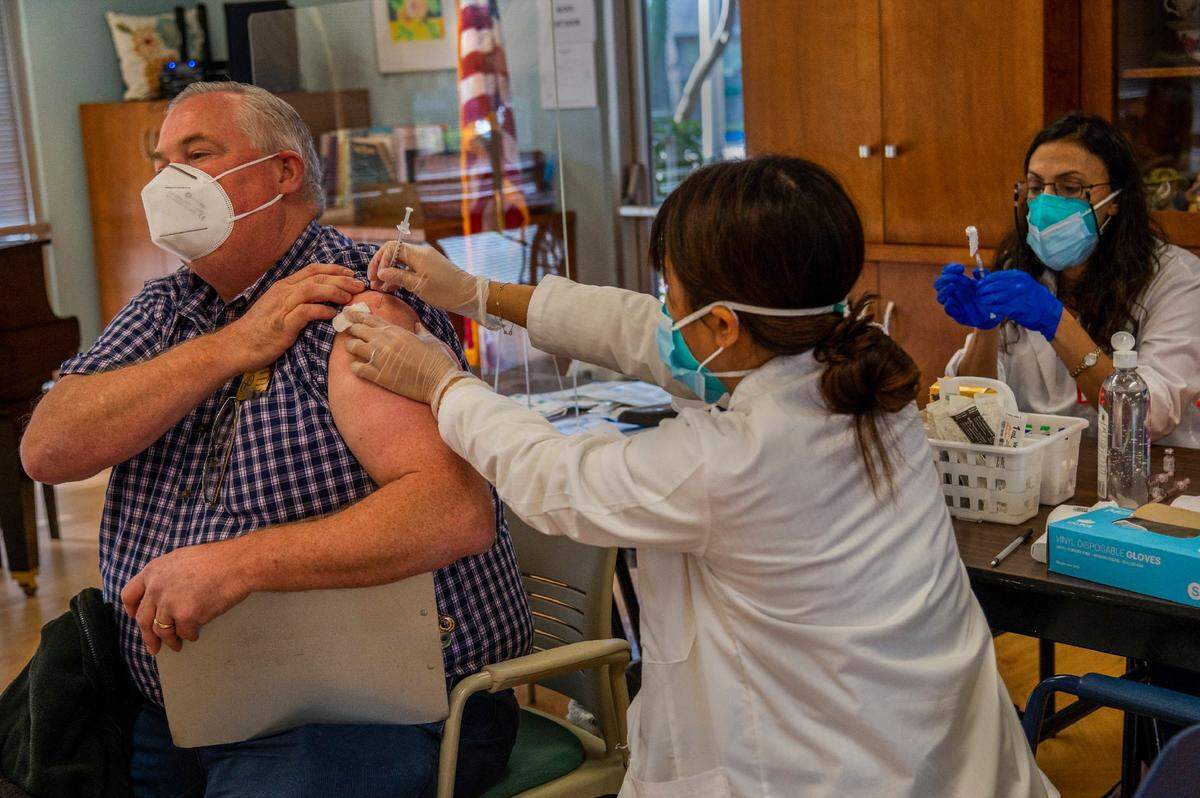
CVS conducted the vaccinations Tuesday at Pioneer House in downtown Sacramento where former nurse Mallory got her shot.
Slightly more than 16,350 of those 42,525 doses are under the direct control of the Sacramento County Health Department, which has the task of filling in the gaps for smaller clinics and ultimately getting vaccinations to people who won’t have access otherwise.
Kasirye said she expects about 7,000 of the county’s 16,350 doses to be injected in residents by the end of this week, mainly at small clinics and some pharmacies. She said the county is working with Safeway and Raley’s to get doses to their pharmacies.
Those 7,000, however, are being given only to front-line health care workers and residents in skilled nursing facilities, in accordance with CDC and state guidelines, she said.
Officials representing skilled nursing homes and assisted living homes say the roll out has been slower than they expected. In some cases, facilities are being told inoculators won’t arrive for several weeks. In other cases, facilities are given notice only a couple days in advance.
“We are behind schedule,” said Eric Dowdy of LeadingAge California, a federation of assisted living facilities.
Vaccine delays
Part of the problem, Sacramento health officer Kasirye said, is that the first vaccines arrived during the Christmas and New Year’s holidays. She said it is also taking time to get more clinics set up and registered with the state to qualify to receive and administer vaccines.
Also, despite clear public desire to move quickly, Sacramento County officials have not wanted to make false steps. “We want to start carefully,” Kasirye said. “We are making sure our nurses are trained. We want to make sure we don’t have wastage.
“I can understand people who are asking how we can make this faster. We are definitely working on that in getting more (community distribution) partners. This is our highest priority right now.”
Over the next few weeks, county health officials hope to open up more locations to give shots to residents across the county, in anticipation for the larger roll out of vaccines for the general public.
This week, Cal Expo will be operational as a vaccination site, run by the county with National Guard help. But, for now, it will only be for people eligible in the first part of the first tier. The county has already begun purchasing refrigerators to store doses at different clinics. Kasirye said the county is considering the logistics of converting community-based test sites run by local organizations — such as at La Familia Counseling Center and South Sacramento Christian Center — into vaccination sites.
“My estimation is we are going to be able to pick up speed a lot faster now ... as people get accustomed to working with the vaccine,” she said.
Kasirye also warned this week that Sacramento may move more slowly through the vaccination priority tiers than smaller counties in the area, in part because the county has more logistical issues dealing with a larger population.
“We might be behind some of the other counties,” she said. “Our goal is we won’t be too far behind.”
The process for letting people know when it is their turn has not yet been nailed down, she said, nor the process for vetting people to make sure they are getting their vaccines at the right time and not jumping the line.
Kasirye hopes to finish vaccinating the first phase of individuals by the end of this month. Among the next in line to receive the vaccine, per state recommendations, are those 75 and older, essential workers at risk for exposure and people living in congregate settings like prisons and homeless shelters. Teachers, people in food and agriculture and some other as-yet undetermined essential services will be among the earlier vaccine recipients as well.
Another issue has raised concerns among health officials: The question of how many people will refuse to be vaccinated.
In congregate care facilities, among the first to get the vaccines, officials say almost all residents are saying they want the shots, but some staff in nursing homes are saying no.
“We don’t have hard data on the vaccine acceptance rate, but we are hearing anecdotally that nearly all residents are choosing to get vaccinated while staff acceptance ranges from a high of 80 percent to a low of 50 percent,” said Deborah Pacyna, spokeswoman for the California Association of Health Facilities.
Kasirye said the county is not tracking thus far how many of the vaccines have been turned down by health care workers at hospitals and clinics. Last week, Los Angeles County officials reported that about 20% to 40% of front line health care staff there who were offered the vaccine declined it.
On Tuesday at the Pioneer House in downtown Sacramento, executive director Robert Godfrey said he and health officials are trying to educate staffers about the value and the safety of the vaccines.
He declined to say what percentage of his staff had agreed to take the vaccine, but indicated that among the 150 doses the facility was allocated, more than 40 would be given to staffers. Some staffers are planning to wait for the second go-round of shots in a few weeks, partly so that if some staffers suffer a brief reaction to the vaccine, others will be able to continue working.
“I think it is going to be the vast majority,” he said.
Former nurse Mallory, who was eager to get her shot, said she’s lost friends to the virus. And she has had personal scares. One day, Mallory drove a very sick friend with COVID-19 to the hospital. Luckily, she said, she tested negative afterward.
She has had to wave to her grandchildren from her fourth-story balcony on P Street. Now, she looks forward to being able to hug them again.
“To get the vaccine so early is so special,” she said. “It’s the beginning of the end of this horrible virus.”
This story was originally published January 5, 2021 at 4:18 PM with the headline "Here’s why Sacramento’s COVID vaccine rollout has been so slow."