Why California caregivers finally could get unemployment after deaths of children, spouses
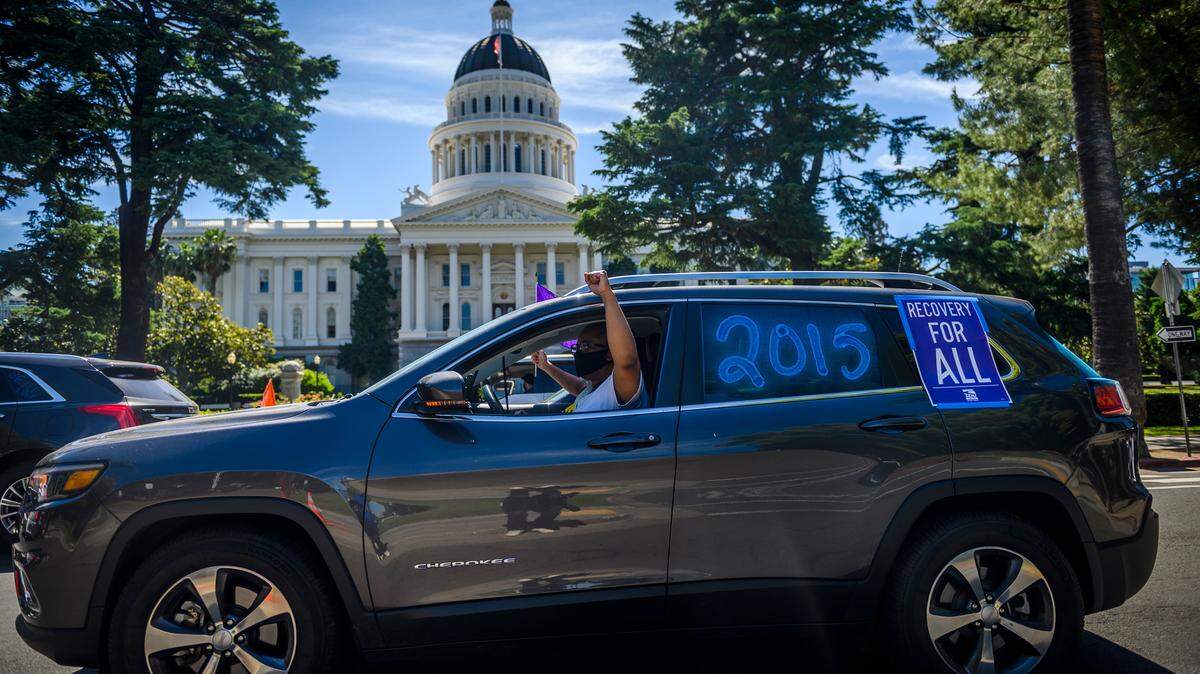
Some 120,000 California caregivers tending for their spouse or children could be eligible to receive the state’s unemployment insurance when their dependents die, under a bill on Gov. Gavin Newsom’s desk.
Assembly Bill 1993, which got a near-unanimous approval from both chambers of the Legislature in the last week of August, would accomplish an expansion of the safety net that unions representing home care workers have pushed for years.
Union officials said the bill will prevent a double whammy for the caregivers: The loss of their spouse or children, and the loss of income — $13 to $17.25 an hour depending on counties — that came with taking care of them.
“In the midst of the current pandemic, (if) my child or my spouse passes away, not only I have to mourn the loss of someone whom I cared for decades, I have to figure out how to survive because I’m not covered under unemployment insurance,” said Arnulfo De La Cruz, executive vice president of SEIU 2015, which represents some of the caregivers.
Through its counties, California pays more than half a million caregivers to tend for those who are old, disabled or blind at their homes. Known as In-Home Supportive Services, the program provides an alternative to nursing homes and care facilities.
Siblings caring for other siblings or adult children caring for their parents under the program already qualify for the state’s unemployment insurance when their dependents die. But not those caring for their spouses or children — who make up about 22% of the state’s in-home caretakers, De La Cruz said.
The expansion is estimated to cost about $28 million a year in state and federal funds, according to a Senate committee analysis.
“It costs money, and it costs deficit,” United Domestic Workers AFSCME Local 3930 Legislative Director Kristina Bas Hamilton said. “But pointing to the economic reality of the recession, people need this more than ever.”
Assemblywoman Sydney Kamlager, D-Los Angeles, said many of the caregivers are people of color who had to leave their workplace to tend for their loved ones. Those caregivers need the safety net of unemployment insurance to train themselves to rejoin the workforce, she said.
And the bill will make it more desirable for people to become in-home caregivers, who are in need as the state’s population ages, said Assemblywoman Lorena Gonzalez, D-San Diego, who joined Kamlager as the bill’s co-author.
If Newsom signs the bill, the caregivers made eligible could also qualify for any extra unemployment benefits from the federal government.
This story was originally published September 11, 2020 at 5:45 AM with the headline "Why California caregivers finally could get unemployment after deaths of children, spouses."