
Immunocompromised California inmate scheduled for ICE custody despite parole, COVID symptoms
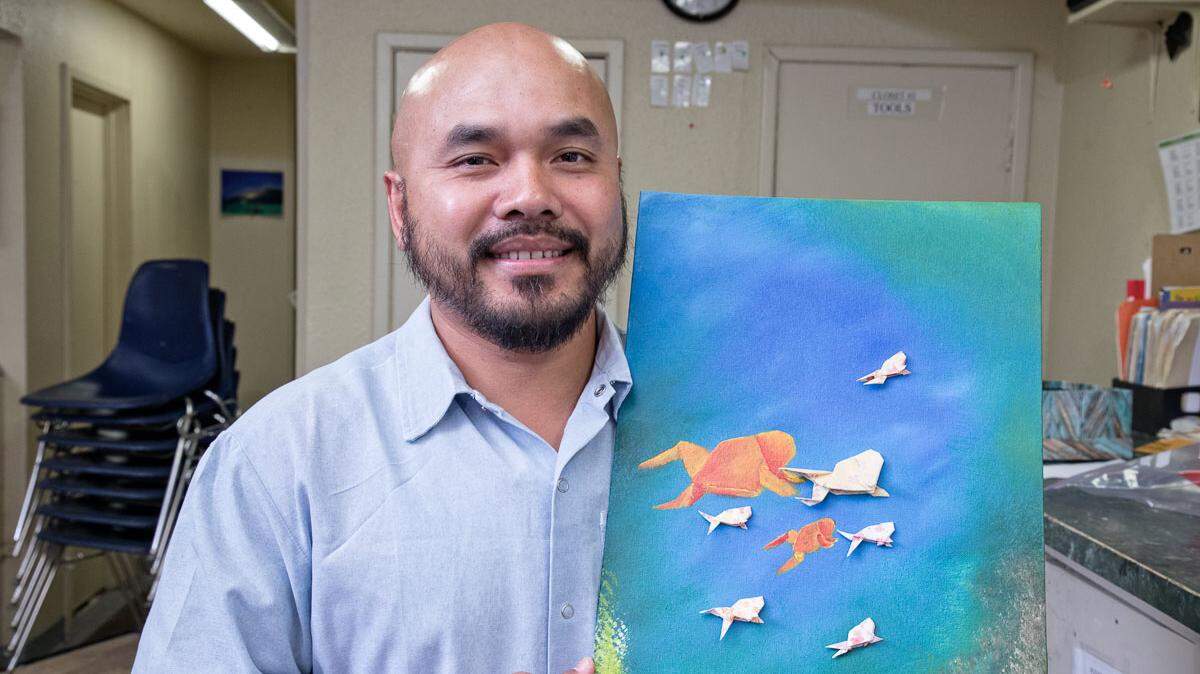
Advocates are calling on California Gov. Gavin Newsom to release an immunocompromised Cambodian American refugee from state prison, where he is scheduled to be transferred to ICE custody on Wednesday despite being granted parole four months earlier.
Chanthon Bun, 41, was granted parole by Newsom in February, a move that should have granted his immediate release. But because he is not a U.S. citizen, U.S. Immigration and Customs Enforcement authorities requested to hold him in custody at San Quentin for eventual transfer to ICE detainment and deportation.
Advocates said Bun began to show early symptoms of the coronavirus a few days ago, losing his ability to taste or smell. Bun has several health issues that put him at greater risk of infection, such as hypokalemic periodic paralysis, a condition that causes episodes of extreme muscle weakness, as well as a blood condition that inhibits blood flow and hypertension.
Bun’s family arrived in the U.S. in 1985 as refugees from Cambodia’s violent Khmer Rouge regime. In Los Angeles, Bun grew up in poverty and was bullied for his limited English, eventually turning to gangs for protection.
Bun was convicted of second-degree robbery and use of a firearm when he was 19. Although no one was hurt during the incident, according to Hien Nguyen, an advocate with Asian Prisoner Support Committee, Bun was sentenced 49 years to life.
Bun has spent most of his 22 years of incarceration in San Quentin State Prison, where he took self-help courses, community college classes and discovered a passion for art. Somdeng “Danny” Thongsy, an advocate with Justice Reinvestment Coalition who was formerly incarcerated in San Quentin with Bun, said Bun “transformed” himself into a leader and mentor for many of the inmates there.
“He has given so much,” Thongsy said. “Just imagine how much he would be able to contribute out here, how much of a mentor he would be to the youth out here who are struggling with the lifestyle he once was in. ... How much he would be able to deter them from that.”
Transferring prisoners such as Bun could also pose a serious health risk to folks in ICE custody, according to Sarah Lee, an advocate with Asian Americans Advancing Justice’s Asian Law Caucus.
The coronavirus has spread every time prisoners have been transferred, Lee said, noting that San Quentin’s surge of 1,000 cases in the last two weeks appears to have stemmed from the transfer of nearly 200 prisoners from the California Institution for Men in Chino.
Newsom said in a Monday coronavirus briefing that 40 percent of the 2,600 prisoners there are considered “medically vulnerable,” and 110 of them may be eligible for the earlier release. In all, more than 2,500 inmmates in Department of Corrections and Rehabilitation system have been infected with the virus that causes COVID-19.
“It’s poor practice to transfer anyone to ICE,” Lee said. “It’s so logical in a public health crisis to let him go home.”
Last week, a federal judge was also worried about the implications of continued incarceration as coronavirus numbers spike in certain states. U.S. District Judge Dolly Gee of Los Angeles ordered all children ICE custody for more than 20 days must be released by July 17.
Newsom could allow Bun to be released on his parole date, advocates said.
“It’s a pretty simple ask. We’re not asking for a pardon,” Lee said. “This is extremely dire.”
This story was originally published June 30, 2020 at 10:14 AM with the headline "Immunocompromised California inmate scheduled for ICE custody despite parole, COVID symptoms."