Bad air from the Oceano Dunes forces people inside. Is it a crisis or exaggeration?
Editor’s note: This is one story in a series about the impact of wind-blown air pollution on the Nipomo Mesa. Tribune reporter Monica Vaughan is investigating the problem in collaboration with USC Annenberg’s Center for Health Journalism. Read the next story, about the cause and responsibility for the air pollution problem, by clicking here.
When Angel Kaye’s mom gets an alert on her cell phone that the air quality is bad, he uses his inhaler and doesn’t go outside. The family closes the doors and windows of their mobile home and turn on an expensive air filter because if they don’t, Angel’s airways constrict and he struggles to breathe.
Angel, 16, started having asthma symptoms after his family moved to the Nipomo Mesa, a rural community in south San Luis Obispo County downwind from an off-road vehicle park run by the state Department of Parks and Recreation on the Oceano Dunes.
If they don’t bunker inside on windy days, residents regularly breathe toxic levels of dust, according to 20 years of air-quality monitor data published by the San Luis Obispo County Air Pollution Control District.
No one knows what caused the condition that leads to Angel’s midnight coughing fits and gasps for oxygen, but he and his family know it’s worse when the air is bad. Angel’s younger sister is showing symptoms too — runny noses, itchy eyes and constant coughing — and the air won’t get better soon.
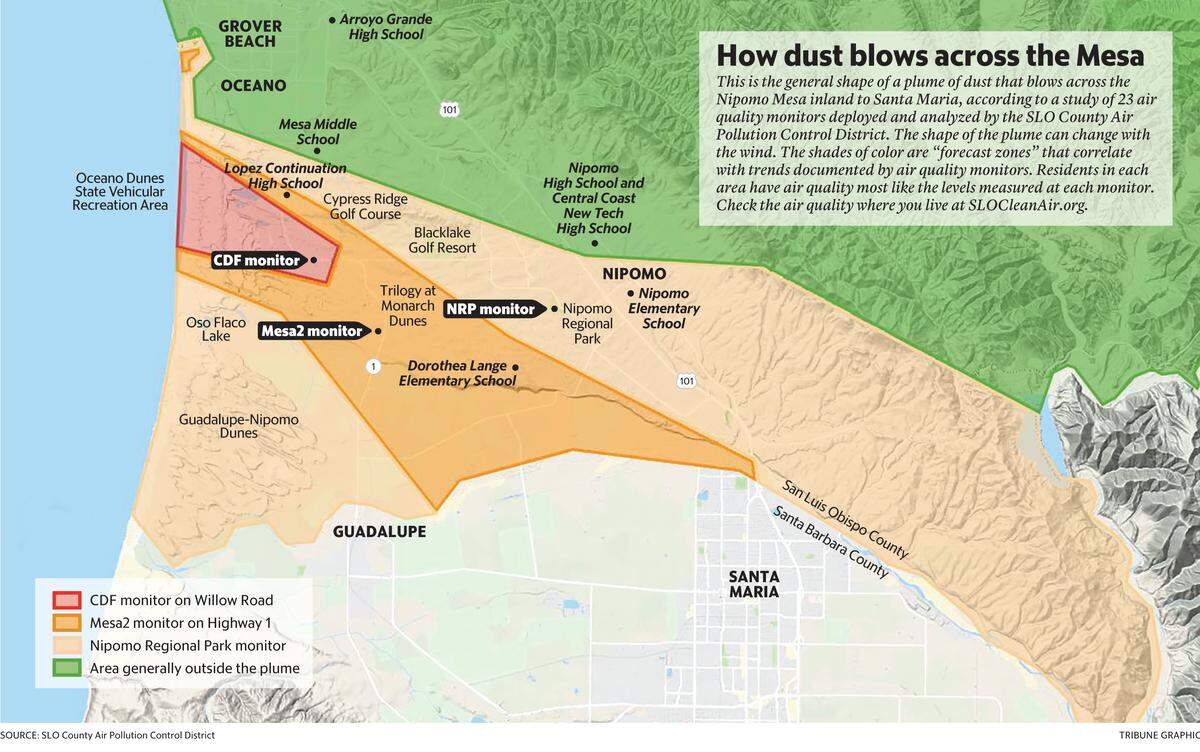
When strong winds blow from the direction of the Oceano Dunes State Vehicular Recreation Area, a large plume of dust billows inland for hours at a time, data show.
The dust covers cars and lawn furniture. It gets inside the house too, and can get into people’s lungs and bloodstream. The problem has attracted the attention of the American Lung Association.
A dust plume blew into the community around 60 times so far this year, data show.
For years, State Parks has failed to comply with clean-air rules and fought enforcement actions brought by the county Air Pollution Control District. The state and local agencies are effectively in a stalemate.
Some elected officials call dust from the Oceano Dunes the biggest public health issue in the county. Others say residents are exaggerating, complaints come from rich retirees who want to shut down the park, and that people shouldn’t live so close to the dunes.
No scientific health study has been done in the community — and that research is needed.
Still, residents believe they experience health effects as a result of the bad air quality, and their experiences align with what medical research has found to be the known health risks of exposure to high levels of particulate matter, a Tribune investigation found.
In the last six months, The Tribune heard from more than 300 Nipomo Mesa residents through online questionnaires, phone interviews and face-to-face conversations on front porches and in front of local schools.
What Nipomo Mesa residents do when the wind blows
When Rose Kaye first got in touch with The Tribune through an online questionnaire she saw on Facebook, she wrote that she worries “about the high winds that make my son sick.”
She’s not alone. People told us they or their family experience chest tightness and wheezing, lots of coughing, more severe allergies, throat congestion, bronchitis, pneumonia, chronic obstructive pulmonary disease and heart disease.
Residents said that frequent spikes in air pollution seriously affect their health and force people to stay in their closed-up homes for hours at a time. Twenty people identified themselves or someone in their family as having some form of lung disease.
Older adults and families with young children have moved away in search of relief. Others said they’ve had no problems.
Air-quality monitors on the Mesa regularly register levels of particulate matter called PM 10 and PM 2.5 air pollution that the World Health Organization deems unsafe. Particulate matter is small enough to travel through the respiratory system into the lungs and bloodstream.
Air-quality alerts warn people of “blowing dust detected on the Nipomo Mesa,” often saying that the air quality may be “unhealthy for sensitive groups.”
“Sensitive groups” means all older adults, people with existing heart and lung issues, and all infants, children and teens. The air quality is sometimes unhealthy for everyone.
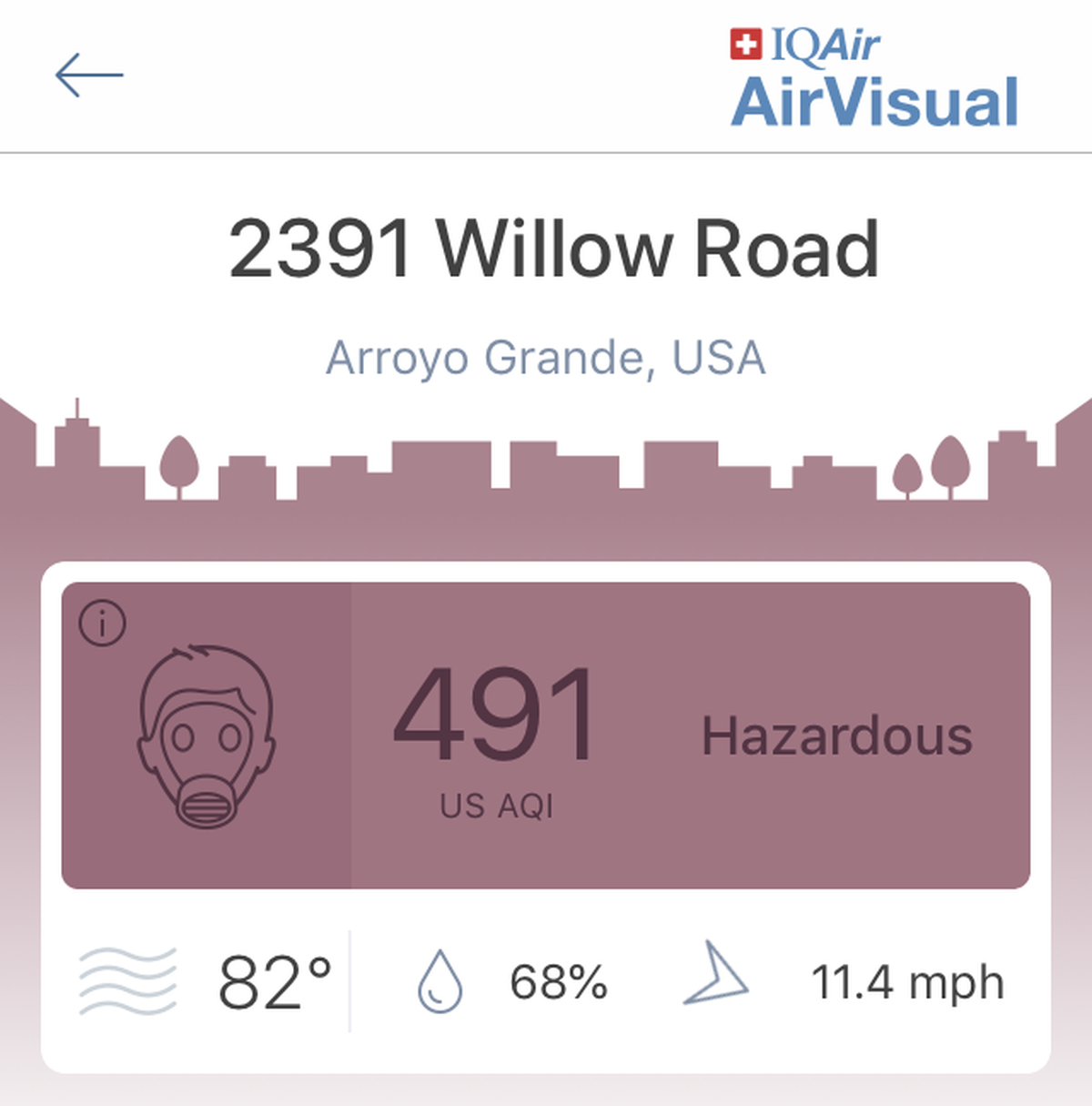
When the wind blows, people who have health issues or are concerned about dust told The Tribune that they stay indoors, take medication, wear masks or use oxygen machines, and use air purifiers or inhalers for asthma. They also said they keep windows and doors closed, limit outdoor activity, leave town to exercise or simply endure the symptoms.
“The good days here are few and far between,” said Louise Easton, who moved into the Nipomo resort community Trilogy at Monarch Dunes with her husband a few years ago. “We thought we would come here, we would use all the facilities, and be able to get out and do things. And we don’t. It’s like living in a bubble.”
After months of breathing trouble, recurring bronchitis and pneumonia, Easton saw an immunologist who diagnosed her with severe allergies and told her they were caused by dust. Now, she takes medication to treat her symptoms and limits outdoor activity.
A growing body of medical research finds that elevated levels of particulate matter correlate with asthma attacks, lung disease, heart attack, stroke and premature mortality. It’s especially bad for children and older adults.
“We want to make sure the house is closed up so the dust can’t get in,” Angel Kaye said about windy days. “If I didn’t take my inhaler and if everything’s open, then usually I start getting really tired. I don’t want to do anything because I’m starting to feel worse.
“I start coughing. It’s always bad.”
Money, recreation and public health
The Tribune shared these stories and air-quality data with several experts, including Patricia Koman, a former U.S. Environmental Protection Agency scientist at the University of Michigan who researches the health effects of air pollution.
“Urgent action is appropriate because you’re talking about things that are causing nuisance and change in people’s behavior,” Koman said. “The Clean Air Act imagines that people have clean air, not that they have to hide in their homes. ... Sensitive groups should be able to live their lives in the open, and breathe the air.”
The public health risk has largely been dismissed or ignored by the state of California and some local elected officials. Often, it’s acknowledged by state agencies with the power to do something, but action is delayed.
The problem isn’t that dirt bikes and quads kick up sand on the nearby Oceano Dunes, and it’s not exhaust from the vehicles.
The worst air days come when strong winds from the northwest carry fine dust particles across the Mesa. While it is natural for sand to blow across the dunes, State Parks’ own research indicates that more dust is emitted in high wind events from areas where vehicles are allowed to ride.
The park does not have to close down to reduce the dust plume; scientists hired to research the issue say that fencing off acreage where emissions are highest would help. State Parks has done some mitigation, but not enough, according to the Air Pollution Control District.
Elected officials lobbied against additional mitigation efforts that could bring relief to downwind communities because of the money the park generates from the thousands of off-highway vehicle riders who love the park.
“The Oceano Dunes provides a major economic benefit to local businesses, cities and counties, and provides access to coastal recreation for millions of Californians,” Assemblyman Jordan Cunningham wrote in a July 3, 2019, letter to the Coastal Commission. “Please do not further limit access to one of state’s coastal treasures.”
Angel Kaye’s mom, Rose, said she doesn’t really pay attention to the politics.
“I’m not taking sides,” she said. “I’m just too busy trying to regulate my own household so my kids can breathe. Whatever does happen, I still have to take care of my family.”
Local children are coughing, a lot
In early September, Kagan Stump, 6, coughed so hard, he threw up.
“It’s hard to watch your child struggle to breathe. It’s scary,” said Gwynne Stump, whose family lives on the Nipomo Mesa near Dorothea Lange Elementary School.
She believed her son suffered from allergies. That’s a common complaint in the area.
Dozens of parents and guardians who spoke to The Tribune in front of the elementary school in May said they or their children cough frequently on windy days.
Nearly a dozen parents said their children have experienced severe allergies since moving to the area — some to the point of needing to take Claritin every day or receive weekly allergy shots. Some have been diagnosed with asthma.
The county Public Health department said there was an uptick in complaints of allergies countywide including on the Mesa last spring, likely because of high pollen counts.
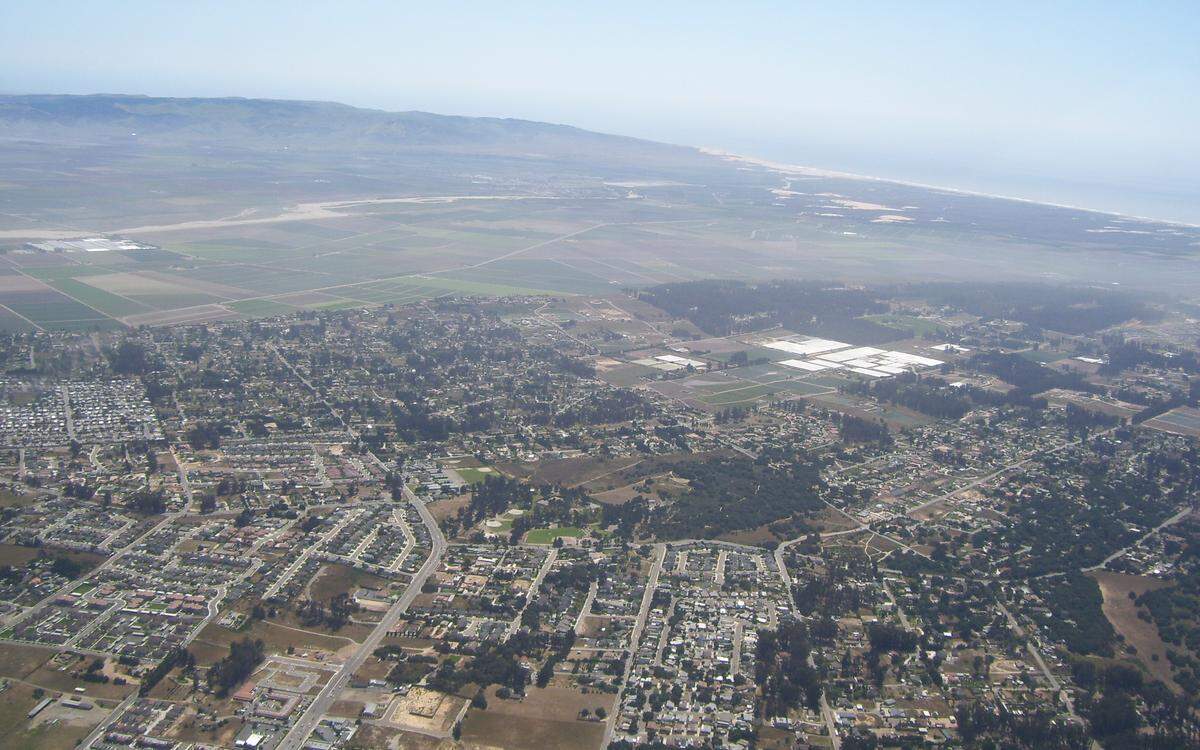
Allergy-like symptoms often turn out to be asthma, according to local pediatrician William Morgan, who has seen several Mesa residents at his nearby practice in downtown Arroyo Grande.
Research suggests particulate matter can exacerbate allergy symptoms, and cause asthma.
While dust from the Dunes is a major source of air pollution, it’s not the only one. There are likely several sources of particulate matter that cause bad air quality on the Nipomo Mesa.
Agricultural fields, dirt roads and barbecues are all constant sources. Wildfire smoke can affect the community, as does construction work.
In the last two decades, the community saw significant growth.
More than 250 acres of eucalyptus trees were removed, replaced by more than 1,000 houses in the Trilogy development by Shea Homes. Some say that made the air worse.
But the main source of particulate matter remains unchanged.
Data from air quality monitors near schools and throughout the community reflect what air pollution regulators have said for nearly a decade: Frequent and temporary spikes in particulate matter register when strong winds blow across riding areas in the Dunes and into the community.
San Luis Obispo County Supervisor Lynn Compton, whose district includes the Nipomo Mesa, said that if she believed air quality was causing her daughter’s asthma, she would move.
That’s a suggestion that Rose Kaye has heard before, and she is not a fan.
“This is our life. This is where we live. This is where our jobs are. I mean, why should we have to move?” she said.
Morgan has recommended that families move when treatment for allergies and asthma have failed to relieve a child’s symptoms.
“I’ve had a few families over the years that no matter what we do, they’re not getting better,” Morgan said. “And actually when they moved, the children were better within a week or two. So it was pretty dramatic.”
“That’s a tough thing to have to tell a family, you know, to change addresses,” he said.
Luckily, Kagan is doing much better now that he’s receiving asthma treatment, Stump said. She still doesn’t know for certain what triggers his coughing attacks — several blood tests have indicated it isn’t common allergens.
“My belief is that it is due to poor air quality,” she said. “Other than closing up the house and staying inside I don’t think there’s much we can do, right?”
Seniors moved to Trilogy without knowing risks
It looks like a low, brown cloud. Hazy. Like living in a dust storm. A large gray mass hovering in the air. A swarm of bees in the distance.
Those are just some of the descriptions of how the air appears on the Nipomo Mesa when the wind is at its worst.
The plume blows in on blustery days, bringing brief levels of particulate matter commonly seen in the most polluted cities in the world.
A massive population study that analyzed data on air pollution and mortality in 652 cities across 24 countries over a 30-year period found that increases in death are linked to exposure to inhalable and fine particulate matter, even at levels that fall below national air-quality standards.
The study, published in the New England Journal of Medicine, said that exposure is liked to increased cardiovascular and respiratory death rates.
“That’s always the fear of being around bad air,” said Stephen Szabo, a respiratory care practitioner with Tenet Health on the Central Coast. “If this is prolonged without treatment or without halting your exposure, it can lead to permanent damage in your lungs.”
Several older adults told The Tribune that they currently have lung disease and that they never experienced respiratory issues until they moved to the Mesa. Most of them never smoked or worked in polluting industries.
Yet many residents — particularly those who live farther from the source — don’t know about the risk or don’t believe it, and potential community members don’t realize the extent of the problem until they move in.
It’s common to develop the so-called “Mesa cough” within a few years.
Dorothy Modafferi, 77, moved to Trilogy in 2013 and starting having severe coughing and breathing problems shortly after. She has two air filters and receives the air-quality alerts.
A pulmonologist diagnosed her with adult onset asthma in 2016.
“The first thing (the doctor) said was I was living in the wrong place for my lungs,” Modafferi said. When she couldn’t breathe without her inhaler, she thought she needed to leave.
“In order to preserve my life, I know I need to get out of there,” she said.
There is a disclosure in the paperwork people sign when they buy their homes, warning people that air quality is a known issue. People told The Tribune that it didn’t seem like a big concern, or the language implied that the problem would soon be solved.
But that hasn’t happened.
Bill Schubert moved to the development close to the Oceano Dunes in 2006. He first noticed the dust when it burned his eyes.
“In the spring of 2018, I got a cold. It turned into pneumonia, and I couldn’t get rid of the cough,” said Schubert, 76. After multiple tests, a biopsy told him he had stage 4 non-small cell lung cancer. He’s been on medication for a year.
No one can say what caused his cancer, but Schubert has an idea after researching potential risks.
“Air pollution, smoking, radon gas, those are the big ones,” he said. “Never smoked, there’s no radon gas in this area (or where he lived before here), the only thing left is air pollution.”
If Sherry Trade had known about the air pollution, she said she and her husband wouldn’t have moved to the Mesa in 2015. Bad air is dangerous for people with existing heart and lung conditions.
Her husband had lung cancer removed by surgery in 2009. After three years at Trilogy, it returned.
“It turns out, he was like the perfect person to be harmed by the particulate matter problem,” Trade said. “I certainly expected him to have longer than 75 (years). You know, I just see it as that probably prematurely ended his life.”
Now, she never keeps the windows or doors open and only does outside activities in the morning.
“I’m not looking for them to close down the park. I’m just looking for them to clean up the air. And evidently, there are ways to do that,” Trade said.
BEHIND THE STORY
MOREHow did we report this project?
Tribune reporter Monica Vaughan has spent nine months investigating air pollution on the Nipomo Mesa, to understand scope of the problem, why it was occurring and how it affects the people who live there.
As part of her reporting, it was critical that we hear directly from residents to learn about the community’s health experience. We knocked on doors, talked with dozens of parents after school, and distributed a questionnaire online. We heard from more than 300 residents.
During that process, we learned that residents had a lot of questions about the risk. So, we spoke with several medical researchers and public health officials to learn more. Then, we hosted an event at Mesa Middle School in Arroyo Grande in September where a panel of experts answered audience questions.
To find out exactly what the air-quality problem was, we gathered and reviewed data from air-quality monitors kept by public agencies, and we purchased our own air-quality monitors and deployed them across the Mesa in homes where people have asthma.
Click the arrow in the top right to read more.
Why did we report this project?
The Tribune has reported on the political fight and regulation efforts at the Oceano Dunes for years. Recently, we decided to reach deeper into the issue to take a closer look with the help of USC Annenberg’s Center for Health Journalism.
The causes and effects of bad air on the Nipomo Mesa are complicated, and the subject has been politically divisive for nearly a decade. Accusations of nefarious agendas and contradictory information have been abundant. With the potential that people in our community were suffering a serious health risk, we decided we need to investigate the issue more closely and clearly lay out what we found.
Specifically, we wanted to find out what is and isn’t known about the health risk, potential solutions to the problem, and whether the State Parks Department, which manages the Oceano Dunes, holds responsibility.
Who did we speak to?
In addition to hearing from 300 residents, we spoke with several experts, regulators and state officials and attended a conference on the health effects of particulate matter.
We interviewed medical researchers like Dr. Patricia Koman, Dr. Christopher Frey, and Dr. Douglas Dockery. We heard from local doctors like Dr. William Morgan in Arroyo Grande, public health officials like Dr. Penny Borenstein, SLO County public health officer, and Dr. John Balmes of the California Air Resources Board. We read peer-reviewed papers about the health effects of short-term exposure to particulate matter published in The New England Journal of Medicine and the AHA Journal Circulation, and more.
To understand the data and what it meant, we interviewed Gary Willey and Karl Tupper with the San Luis Obispo County Air Pollution Control District, Kevin Pearce and Ronnie Glick with the Oceano Dunes State Vehicular Recreation Area, Dan Canfield with the Off-Highway Vehicle Division of the Department of Parks and Recreation, and Jack Gillies with the Desert Research Institute, the lead researcher on dust emissions at the Oceano Dunes.
Who reported this story?
Tribune reporter Monica Vaughan led this project with support from the USC Annenberg’s Center for Health Journalism. Most of the photos and videos were produced by Tribune photographer David Middlecamp. Joe Tarica and Sarah Linn edited the stories.
Engaging the community was a big part of this project. Danielle Fox with the Center for Health Journalism, as well as Tribune interns Cassandra Garibay and Ashley Ladin, helped with public outreach.
Nipomo resident Sam Saltoun assisted with technical aspects of the air-quality monitors.
We received help reviewing the scientific literature from Dr. Carrie Schuman, who joined The Tribune over the summer as a fellow with the American Association for the Advancement of Science.
To support The Tribune investigate issues like these, please consider subscribing at http://www.sanluisobispo.com/NipomoMesaAir
Please support our journalism with a subscription.
Monica Vaughan reported this project with the University of Southern California Annenberg Center for Health Journalism 2019 California Fellowship and engagement support from the Center’s engagement editor, Danielle Fox.
This story was originally published November 13, 2019 at 4:45 AM with the headline "Bad air from the Oceano Dunes forces people inside. Is it a crisis or exaggeration?."