
Rising costs hitting Fresno’s small Latino businesses hard. They’re in ‘survival mode’
This story is part of the Central Valley News Collaborative — a bilingual, community journalism project funded by the Central Valley Community Foundation and with technology and training support from Microsoft Corp. The collaboration includes The Fresno Bee, Valley Public Radio, Vida en el Valle, Radio Bilingüe and the Institute for Media & Public Trust at Fresno State.
Dozens of varieties of colorful Mexican pastries, cookies and flaky empanadas line the shelves at Panadería Cafe Oaxaca, a family-owned bakery located off a busy street in Clovis.
At the bakery counter, display cases brim with traditional sweet breads coated in thick layers of violet and fuschia-colored frosting that are baked to a rich, bronzy brown. Some are named after their shape, like conchas, a light, doughy bread that resembles a seashell, or orejas, a layered-puff pastry folded to look like an ear. The mingling scents of melted butter, sugar and yeast spill out the bakery’s doors and fill the street.
The panadería’s distinct treats have earned a loyal clientele since it opened more than twelve years ago. But lately, keeping up with the demand has taken a toll on the small family bakery, as owner Eugenia Garcia struggles with skyrocketing costs due to inflation. Inflation occurs when demand for a service or good outpaces supply, driving up the cost of those products.
“Our customers have been very loyal, especially during the pandemic,” Garcia, 52, said in Spanish. “But it’s been difficult keeping up with the prices.”
Inflation hit a 40-year high in December as the consumer price index – or, the average fluctuation of prices on a yearly basis – increased by 7% nationally, according to the U.S. Bureau of Labor Statistics. That means prices are up by 7% for the first time since 1981.
As a result, inflation remains a top concern among business owners across the U.S. At least 22% of business owners said inflation is their “single most important business problem,” according to a January analysis from the National Federation of Independent Business. It is the largest share in four decades, the analysis shows.
The problem is especially acute in Fresno County, where many small Latino businesses that have weathered the pandemic are now confronting supply chain disruptions, production costs, labor shortages and surging demand for goods and services. It’s forced many of them to scale back their operations, lay off employees, or raise prices, said Sandra Vidrio, a business development officer at the Fresno Area Hispanic Foundation, an organization that provides resources, consultation services and grants to Latino businesses.
“It’s like a ripple effect,” Vidrio said. “Many of them are in survival mode right now and they’re saying, ‘as long as I can pay my bills this month, not fall behind, I can move forward.’’’
Garcia, a native of Oaxaca, Mexico, operates her business with her husband and four children. They are the only employees and work every day of the week. She said wholesale vendors have significantly marked up their prices for some products including flour, sugar and milk, as well as packaging items such as paper, takeout boxes and disposable utensils. Sometimes, the items are not available or she has to wait months for them to arrive, she said.
“Each time we try to buy certain products, vendors will tell us they don’t have it or the price is too high,” Garcia said. “But we need those ingredients to keep operating our business. So each month, our invoices keep getting more expensive by another $100 or $200.”
Still, she hasn’t yet made the tough decision to increase the cost of her baked goods. She says she’s avoiding raising prices because her customers have been so supportive throughout the pandemic. But the high costs have forced her to stop making and selling some pastries, including chocolate and blueberry muffins and bolillos con queso, a type of savory bread stuffed with cheese and jalapeños.
“We have to tell people often that we don’t have or make certain things anymore,” she added. “And we should be raising our prices, but up until now we haven’t done it at all — since the pandemic began. It’s all very frustrating.”
Inflation forces Latino businesses to make tough decisions
Pedro Quirarte, 26, took a major financial hit due to the pandemic and has not yet fully recovered.
Quirarte owns Jalisco Market in northwest Fresno. The business, which he inherited from his parents, relies heavily on large parties and events centered around Latino festivities. He sells specialty Mexican goods like piñatas, candy, traditional cookware items, party supplies and clothing.
This past July, he considered closing the shop due to the increasing cost of wholesale products and declining sales. But instead of closing, he made other hard decisions to keep the shop’s doors open.
“I had to lay off a couple people because it was just really slow — there’s nothing, really, we could do,” he said.
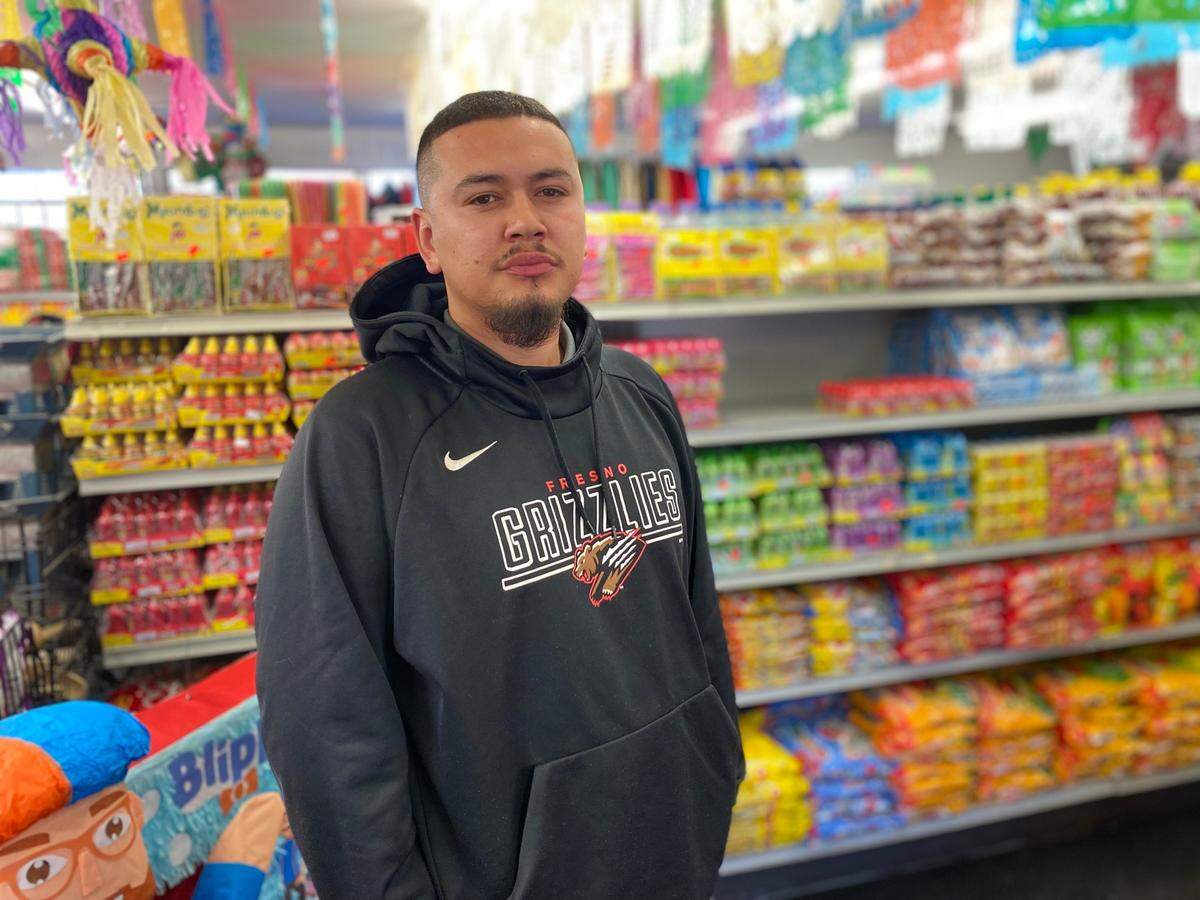
He’s also had to raise his prices in order to keep up with the wholesale costs. He said he tries to increase the cost of less expensive items, to keep prices affordable for his customers.
“A lot of products have gone up pretty drastically, so you have to pass that price off to your customers and sometimes they’re not willing to pay that,” he said.
Quirarte’s challenges with rising wholesale prices stem from supply chain disruptions and worker shortages in manufacturing and warehouse industries, said Vidrio of the Fresno Area Hispanic Foundation. Many warehouse employees contracted COVID-19 during the pandemic, which contributed to supply chain disruptions and increasing prices, she explained.
Small businesses are ill-equipped to adapt to these changes, she said.
“As long as the cost of materials continues to increase, the product price for these business owners will also continue to increase,” she said. “And for small businesses, they may not always know how to cut costs and how to grow projections or how to bring in new sources of revenue.”
Fresno City Councilmember Luis Chavez, who represents District 5 in southeast Fresno, said inflation is particularly harmful to many minority business owners, who already face language barriers and experience difficulty accessing small business grants and bank loans.
Chavez said he expects inflation will only continue to increase in the coming months and force some businesses to cut staff or close. This could threaten the vitality and authenticity of the neighborhood’s diverse businesses, including southeast Fresno’s Mexican taquerias, panaderías and small artisanal retail shops.
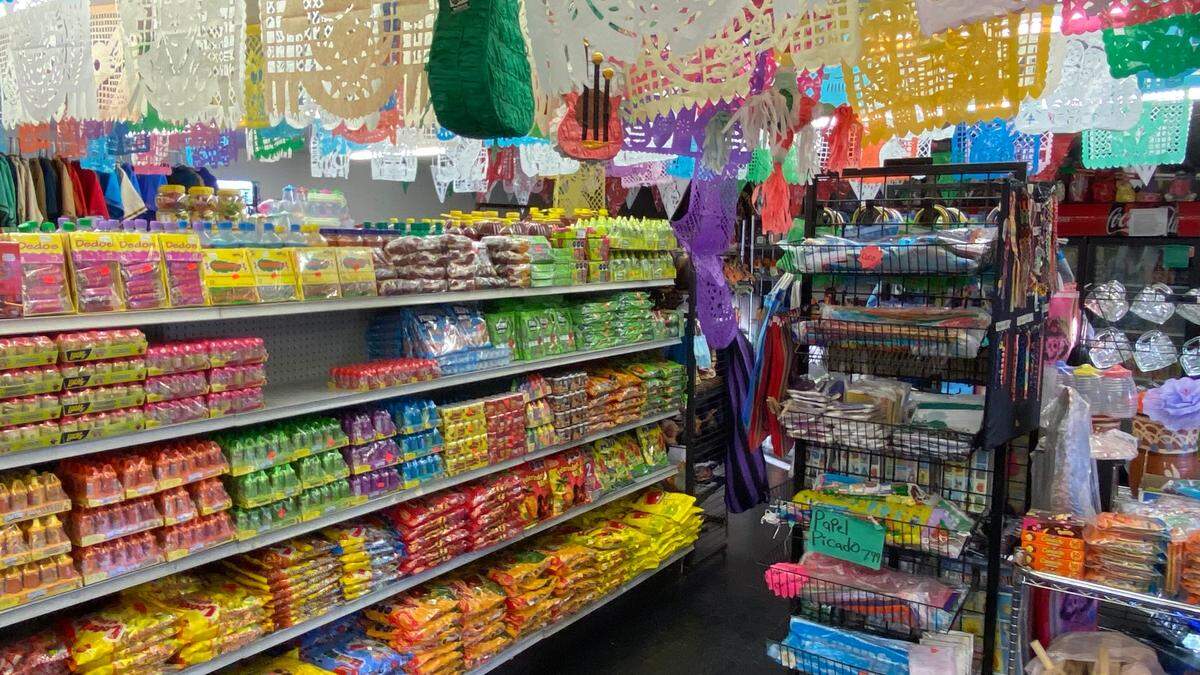
“These small businesses that end up having to lay people off or shut down, then that increases the unemployment rate in the neighborhood, and that increases vacant buildings in the neighborhood, which then leads to blight,” he said.
That’s why Chavez has been pushing for more public dollars to help small businesses stay afloat. The Fresno City Council last week allocated $2.5 million in American Rescue Plan Act funds for small business owners. For the first time, street vendors will also qualify for the funds, Chavez said.
“We should preserve and help those businesses along the way because they really are part of the culture and tradition of our neighborhoods,” he added.
Fresno’s Latino businesses weather pandemic, rising prices
Garcia, who owns Panadería Cafe Oaxaca, comes from a long line of bakers and always planned to continue the family tradition by opening her own business. She said she considers the bakery to be one of her greatest accomplishments and one that she will pass on to her children.
Like many other immigrants, she moved to the U.S. with her family to pursue the American dream. She’s unsure of what the future holds, but she has no plans to close anytime soon. The high costs of her ingredients and products are cutting down some of her profit margins, but she still plans on expanding her business to a larger location, where they can sell a wide variety of specialty pastries, including vegan ones, as well as other goods like coffee.
“We don’t have a day off,” she said. “We keep working hard, so that eventually we can make that move. Our biggest goal is to serve our customers the best way we can and for them to leave the shop happy.”
Garcia’s 25 year-old daughter, Rosi, said she’s proud of her parents for weathering all of the challenges brought by the pandemic. She’s hopeful they’ll be able to expand by December and is happy to be carrying on the family tradition.
“Our business is like another family member,” she said. “We treat it with love, we treat it with patience, we do everything we can to make it grow. We put our heart and soul into it.”
This story was originally published February 27, 2022 at 5:00 AM with the headline "Rising costs hitting Fresno’s small Latino businesses hard. They’re in ‘survival mode’."