Gov. Gavin Newsom signs law ordering review of ‘toxic’ pesticide linked to Parkinson’s

A new law will require California pesticide regulators to reexamine the use of one of the most widely used weedkillers in agriculture.
Signed into law by Gov. Gavin Newsom on Saturday, AB 1963 requires the state’s Department of Pesticide Regulation to complete a reevaluation of paraquat dichloride by January 1, 2029.
Paraquat dichloride is one of the most commonly used herbicides in the country used to kill weeds, according to the U.S. Environmental Protection Agency. The agency says the substance is “highly toxic” and that one small sip can be fatal. Over 60 countries have banned the use of paraquat.
In 2022, 373,438 pounds of paraquat were sprayed throughout California in 6,264 unique applications, according to state data.
Research shows it can have serious health impacts. A 2024 UCLA study published in the National Institutes of Health found that paraquat exposure increases the risk of Parkinson’s disease. Parkinson’s is a brain disorder that causes unintended or uncontrollable movements, such as shaking, stiffness, and difficulty with balance and coordination, according to the NIH.
UCLA researchers studied 829 patients who lived and worked within 500 meters of agricultural operations in Kern, Fresno and Tulare counties since 1974 to the year they were diagnosed with Parkinson’s disease. Then, they compared them with 824 individuals living in these counties who did not have Parkinson’s.
The researchers found that “living near paraquat applications every year in the exposure window was associated with an 83% increase in the odds of PD (Parkinson’s disease).”
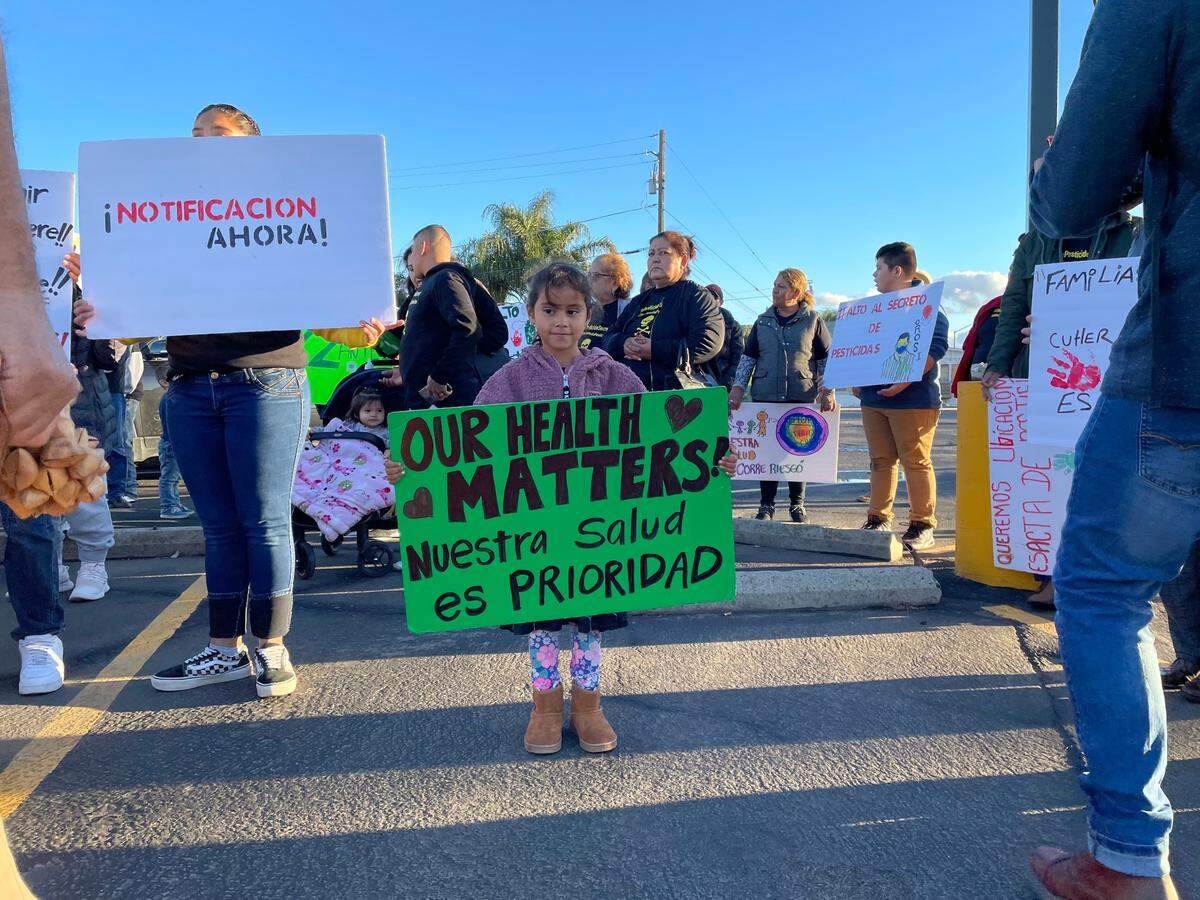
Legislators behind the bill said they introduced the bill because paraquat’s effects are “mostly borne by the Latino community.” Environmental and community groups advocating for farmworkers also stumped for the bill.
“I’m grateful to the Governor for signing AB 1963. This crucial legislation will ensure that farmworkers’ concerns about paraquat are heard and that this toxic chemical is re-evaluated,” the bill’s author, Assemblymember Laura Friedman, a Democrat from Burbank, told the Fresno Bee in a statement.
In the initial version of the bill, Friedman proposed ending the use of paraquat in California by January 2026.
The amended version of the bill directs the Department of Pesticide Regulation to determine, following its reevaluation, whether to retain, cancel, or suspend the weedkiller’s registration. State pesticide regulators may also consider placing new restrictions on the use of pesticide products containing paraquat dichloride.
Growers who opposed the new law said farmers would be forced to turn to more carbon-heavy alternatives if paraquat is banned and that the chemical is essential to keeping crops healthy. They also point out that the EPA hasn’t confirmed a causal link between paraquat exposure from labeled uses and adverse health outcomes such as Parkinson’s disease and cancer.
The law’s opponents, which included several agricultural organizations, said in a July 2 senate hearing that California already has some of the strictest regulations in agriculture. State regulators, they argued, already have a process to review existing data and assess whether to make any changes.
“Making the decision to place a pesticide into reevaluation should be a holistic, public process, which takes into consideration multiple factors, such as the development of alternatives,” Newsom said in his signing message. “We must allow DPR to utilize this process, as it is critical to support the systemwide adoption of sustainable pest management.”
In a statement to The Bee, DPR said the agency evaluates all pesticides for human health or environmental impacts before they can be registered for sale or use in California. The agency also conducts a continuous evaluation process to consider new scientific data, monitoring and information related to pesticide risks and impacts.
Leia Bailey, the agency’s deputy director of communications, said DPR scientists are finalizing their review of more than 4,000 public comments and 100 scientific studies regarding human health and ecotoxicology impacts from use of paraquat to inform next steps, including reevaluation.
“The department takes seriously concerns raised regarding potential human health and environmental impacts associated with paraquat use,” Bailey said.
Newsom also signed a bill last week that strengthens enforcement of pesticide regulation in school zones and extends these protections to students, teachers and staff in private schools.
Pesticide notification program forthcoming
The California Department of Pesticide Regulation is finalizing a first-of-its-kind program that would notify residents living near agricultural operations when pesticides will be sprayed.
The program, known as SprayDays California, will alert users 24 to 48 hours ahead of when pesticides will be sprayed within a one-mile radius.
The notification program has been under development over the past several years. In 2022, county agricultural commissioners in Riverside, Santa Cruz, Stanislaus and Ventura counties partnered with DPR to conduct pilot projects to study different models of the pesticide application notification system.
DPR is in the final stages of finalizing the regulation and program and expects to launch the statewide pesticide application notification system in early 2025.
5,000 lawsuits over paraquat exposure
A legal battle is under way over the long-term health impacts of paraquat use.
Over 5,000 farmers have sued Syngenta, the manufacturers of paraquat, as well as Chevron, which sold paraquat until 1986, in a federal mass tort multi-district litigation, referred to as the “Paraquat Products Liability Litigation.”
These individuals allege their Parkinson’s disease was caused by exposure to paraquat and that they weren’t warned of the dangers of chronic exposure because the companies concealed the herbicide’s dangers from the public.
Reuters reported in April that there are hundred paraquat cases are also pending in state courts, primarily in California.
This reporting is supported by the Latino Media Collaborative, a non-profit news media organization that creates and fosters transformative media as well as everyday news for the Latino community. Visit www.latinomedia.org to learn more.
This story was originally published October 2, 2024 at 5:30 AM.