Agriculture and coronavirus: No major disruption in San Joaquin Valley as of yet
Nervous consumers are stripping grocery store shelves bare of necessities such as bread, eggs, toilet paper and soap in response to the threat of coronavirus. A growing number of businesses are either closing or encouraging their employees to work from home and heed calls for “social distancing.”
For Fresno County’s $7.9 billion agriculture industry, however, it’s not that simple. Farming and food processing – hands-on industries in which workers cannot work remotely – have been deemed essential to the U.S. food supply chain during the coronavirus pandemic.
Early spring is one of the slower times of the year for central San Joaquin Valley farms, and thus far there seems to have been little disruption to the region’s agricultural industry, said Ryan Jacobsen, president of the Fresno County Farm Bureau. “The fact is there are always things happening on farms year-round,” he said. “This happens to be a slightly slower time, so we’re in a transition time right before things get heavy in the spring and early summer.”
In fields and farms, the idea of social distancing being promoted now to minimize the potential spread of coronavirus isn’t anything new. “We are fortunate that when it comes to the field side of things, social distancing has pretty much been the case since the beginning of (agriculture’s) existence,” Jacobsen said.
“Obviously, farms just can’t up and close” like other kinds of businesses, he added. “There are things that have to continue on a farm. We’re trying to make sure that farms and livestock operations continue to be included among the ‘essential services’ that have been declared by the state and federal governments” in which people need to keep working when they can.
Dairies must milk cows daily
Jacobsen offered the dairy industry as an example. “If you don’t milk cows twice a day, it’s catastrophic,” he said.
And there’s a lot of milking going on. In 2018, the dairy industry accounted for about $415 million in milk production in Fresno County, according to the county’s agricultural commissioner.
At Rollin Valley Farms near Riverdale in southern Fresno County, dairyman Donny Rollin said he’s seen no disruption, but he is concerned about operations if his labor force is affected by illness. “At this point, I hope we’re not jinxing ourselves, but I haven’t had anybody who’s not showing up for work,” Rollin said. He added that he’s making sure to share information with his 24 full-time employees on how to guard against catching or spreading the virus, including staying home when they’re sick, washing or sanitizing their hands frequently and other steps recommended by the Centers for Disease Control.
But with 2,000 cows being milked in three shifts around the clock, “if I lose somebody to this or to the flu, then I’m searching for someone to cover and then have to shift other people around,” Rollin said.
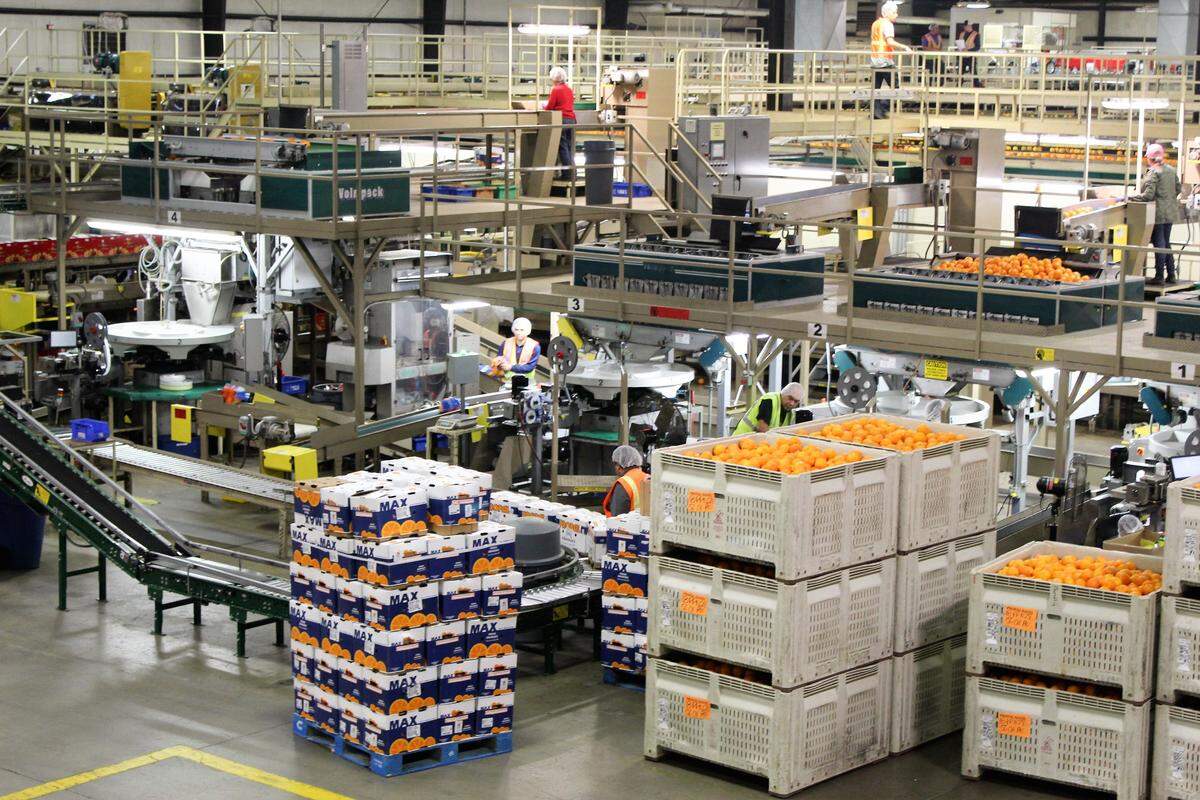
Valley citrus harvest continues
Citrus harvesting and packing is one part of the agriculture industry where activity is happening in earnest now, said Casey Creamer, president of the Exeter-based trade organization California Citrus Mutual.
“The number one thing is that our members are implementing practices and looking out for employee safety and health,” Creamer said. “That’s the highest priority in the industry, trying to stay on top of the latest guidelines from the state and federal government and the CDC.
“We’ve been instructed by the president’s order that agriculture is critical to the food-supply chain to remain in operation as much as possible,” he added. “There have been some effects as everyone deals with this: employees that potentially come down with something, or family members whose schools are closed. … But to date we haven’t experienced any significant impacts” to the harvest or packing season.
In packing houses, Creamer said, some employers are limiting access to breakrooms to maintain distance between employees, and following other sanitation and food-safety programs. “We’ve been preparing; this is not the first outbreak we’ve been through,” he added, referring to seasonal flu bugs that can spread through a workforce and keep workers at home.
Meat processors keep operating
The meat-processing industry, which already is required to meet standards for sanitation in meat plants, is taking steps to bolster operations in response to coronavirus, said Ira Brill, vice president of communications for Foster Farms, which operates poultry processing plants in Fresno and Livingston.
“We’ve always operated with good management practices and rigorous personal hygiene as an ordinary part of business,” Brill said. “In that sense we have a step up. Thus far, we have not seen an absentee issue” related to coronavirus.
“And now we’re doing what everyone else is doing, distributing more sanitizers throughout the organization” and providing workers with guidance on protecting themselves from the disease.
Brill said it’s important for agriculture companies to continue producing to meet growing demand from anxious consumers. “I was in a grocery store this morning talking to customers and some of the shelves were stripped bare of everything,” he said. “We have to help this country address the supply chain issues. I’m grateful to our employees for working in what we recognize is a very difficult time.”
UFW shares concern
The United Farm Workers union, in an open letter to the agriculture industry, expressed concern for not only food and grocery customers, but for the field and farm workers who may feel like they cannot afford to take time off from their jobs even if they’re sick – if they are even being made aware of the threat of the virus.
“It is imperative that we all take further proactive steps to ensure the safety of farm workers, protect buyers and safeguard consumers,” UFW president Teresa Romero and secretary-treasurer Armando Elenes wrote. “Agricultural employers have a duty to help all farm workers feel confident as they address their own health needs as well as those of immediate family members.”
The union urged farm employers to not only make sure their workers are aware of the personal sanitation guidelines issued by health experts, but to take additional measures for workers including extending sick leave and eliminating waiting periods before employees are eligible for sick leave; putting workers on paid leave if they or a family member is infected with coronavirus; and offering daycare assistance or schedule flexibility as more schools in the region close because of the pandemic.
Farmers market scales back scope
For consumers who shop at local farmers markets, some changes are likely to be more apparent than others. Felix Muzquiz executive director of the twice-a-week Vineyard Farmers Market at Blackstone and Shaw avenues in north Fresno, said extra hand-washing stations have been set up for customers and vendors, and some non-food vendors are not currently allowed to participate.
“It’s a very austere kind of setup right now,” Muzquiz said. “We’re asking people not to come in large crowds. We don’t have as many people because of the season right now.”
The exchange of money and EBT tokens between customers and vendors is one of Muzquiz’s concerns for potential spread of coronavirus or other diseases.
The Vineyard market operates on Saturday mornings and Wednesday afternoons, so far with no disruption or closure because of the virus. One observation Muzquiz did note: On Saturday the foot traffic “was very mild and steady throughout the day, but no one was standing around chatting like they usually do.”
More people than usual showed up for the midweek date last week. “We have regular customers who typically come twice a week anyway to buy things fresh; they buy what they need, not hoarding a a lot of things,” Muzquiz added. “I’m hoping we can keep it under control and make sure people can get their local produce and other items they need to get through the week.”
In downtown Fresno, the weekly Kern Street farmers market near the Fresno Convention Center isn’t scheduled to launch its 2020 season until May, said Erin Paz, event coordinator for the Downtown Fresno Partnership that organizes the market. “We’re hopeful that by the time May comes, we’ll be able to open,” Paz said. “We still have some buffer time between now and then, so we’re keeping an eye on all the recommendations.”
BEHIND THE STORY
MOREWhat you should know about the coronavirus
The World Health Organization has officially declared the spread the novel coronavirus as a pandemic, and the virus is spreading in the United States, particularly on the West Coast.
Officials are urging people to take precautions to avoid getting sick, and to avoid spreading the disease including social distancing.
Click the drop-down icon in the upper right of this card for more information on symptoms and how to stop its spread.
What is coronavirus?
Coronaviruses are a class of viruses that regularly cause illnesses among adults and children. But, this outbreak is caused by SARS-CoV-2, a novel virus that has spawned a new disease called COVID-19. This infection can cause a particularly harsh respiratory condition and can lead to death in older individuals and those with underlying health problems.
The CDC believes the COVID-19 virus spreads among humans by person-to-person contact, including via cough and sneezing. That’s why health officials urge sick individuals to avoid contact with other people. Social distancing of 6ft is recommended for everyone.
For more information, visit the website for the Centers for Disease Control and Prevention.
What are the symptoms?
Corona means crown, and the virus has little spikes that help it attach to your respiratory system. Symptoms are similar to the flu and include congestion, coughing, shortness of breath and a runny nose. But, it can worsen causing pneumonia and acute respiratory distress syndrome and death.
How can I stop the spread of the coronavirus?
How does it spread?
We’re still learning about this infection. Things are changing constantly. The spread seems to be from bigger droplets, coughing, sneezing on your hands and then touching your eyes, your nose or mouth. The influenza virus can last on surfaces for 24 hours. For this virus, we are still learning how long it can last but it may be as long as 48 to 72 hours.
And what you can do to help stop the spread:
Practice social distancing, and definitely stay home if you’re ill. Wash your hands regularly with soap and water, and cover your coughs and sneezes.
If you develop symptoms similar to the coronavirus, you should stay home from work or school and avoid contact with others. It can take up to 14 days after coming into contact with the virus to develop symptoms.
Taking precautions is the best way to stop the spread of the coronavirus. For more on how it spreads, watch this video.
Note: No public health agency has recommended that the general public wear masks to stave off infection. Here are more public health recommendations:
- Practice social distancing
- Wash your hands often with soap and water for at least 20 seconds. If you really can’t get to soap and water, then use a hand sanitizer that has at least 60 percent alcohol.
- Can’t wash your hands right away? Avoid touching your mouth, nose and eyes as these are areas where the pathogens can invade your body.
- Practice cough hygiene with covering your mouth when you cough or sneeze, either using a disposable tissue or into your clothed elbow. Throw used tissues in the trash right away.
- If you are sick, stay at home. If you develop respiratory symptoms contact your doctor for advise and to determine if you need to go for care or viral testing. Call ahead before seeing medical care at a doctor’s office, clinic or emergency department, as they’ll need to separate you to help protect others.
- ChrisAnna Mink, Modesto Bee, and McClatchy staff
This story was originally published March 19, 2020 at 5:00 AM.