Central Valley groundwater pumping, land-sinking stressing Aqueduct. Is there a fix?
AI-generated summary reviewed by our newsroom.
- Aqueduct delivery capability has dropped 3% due to subsidence, risks 87% drop by 2043.
- $32M repairs are needed, but the federal government hasn’t produced its share of the funding.
- Southern California water board members ask why Central Valley farmers are not held responsible.
Years of collapsing areas of land in the San Joaquin Valley — caused primarily by the over-pumping of groundwater for farming — has taken a toll on California’s largest water delivery system that relies on stable land to work well.
A state report released this year determined its 2023 annual water delivery capability had fallen 3% compared to original-design deliveries. If no action is taken, it could fall up to 87% by 2043.
If that happens, 21 million Californians would feel the impacts, according to the California Department of Water Resources (DWR).
“There are no quick solutions,” DWR engineer Jesse Dillon told The Fresno Bee. “Everybody’s going to need to realize that this is as big a problem as it is.”
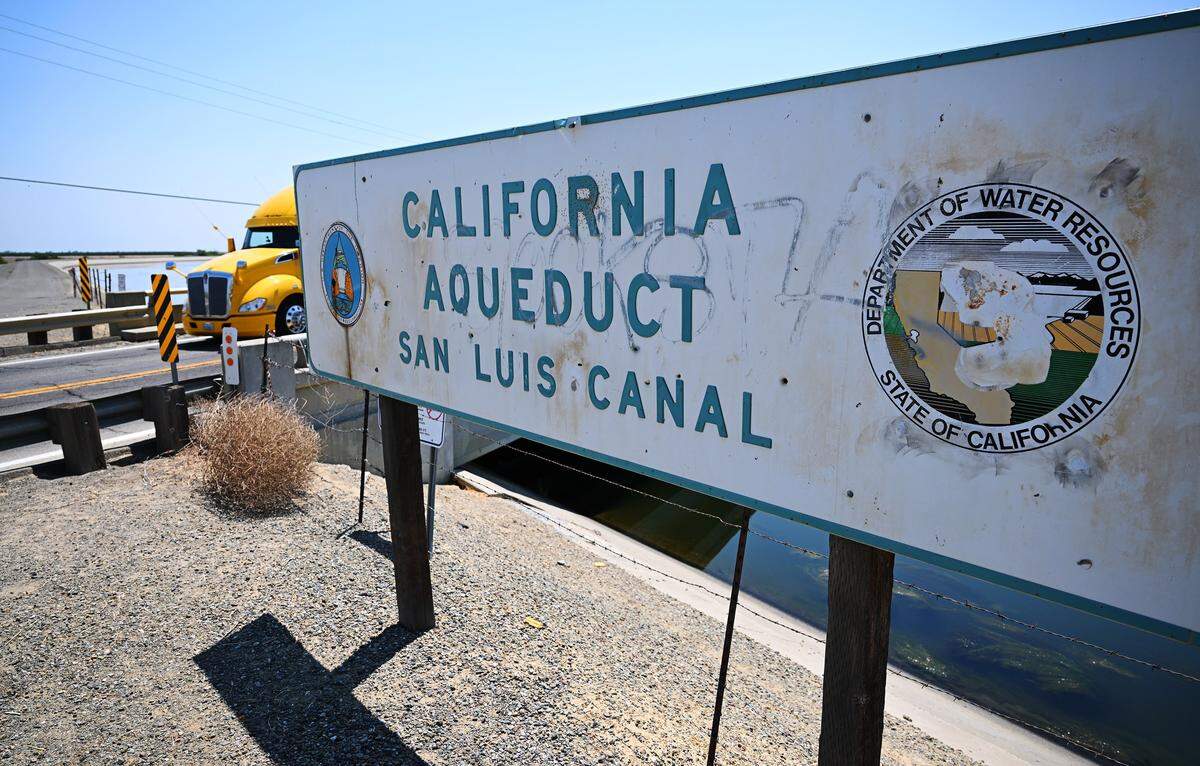
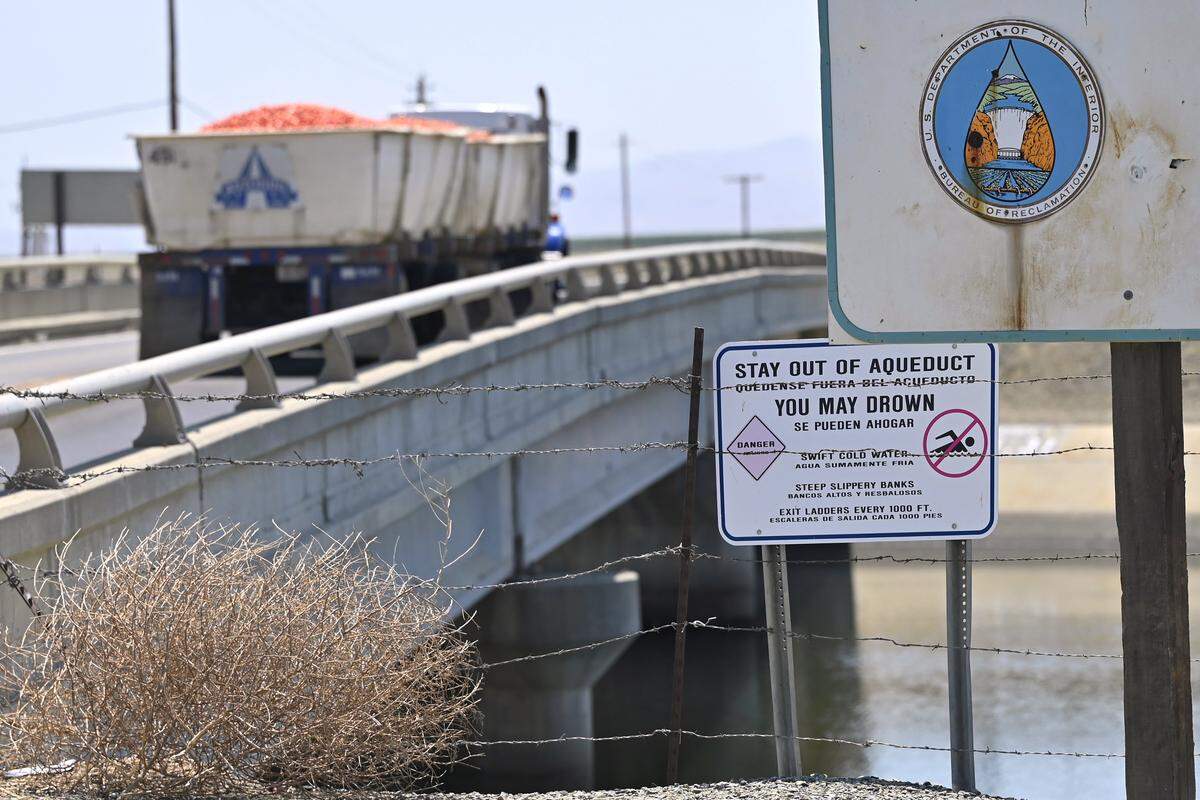
Dillon is a manager for a program created to address subsidence impacting the California Aqueduct, a 444-mile canal system that uses gravity and pumping to move water across California from north to south. It’s part of the State Water Project, a system more than 700 miles long that delivers surface water to contractors with member agencies that serve farms, businesses and 27 million Californians.
In the Valley, the state shares the aqueduct with the U.S. Bureau of Reclamation’s Central Valley Project, a federal program serving more than 250 contractors that also provide water for agriculture, industry and residents.
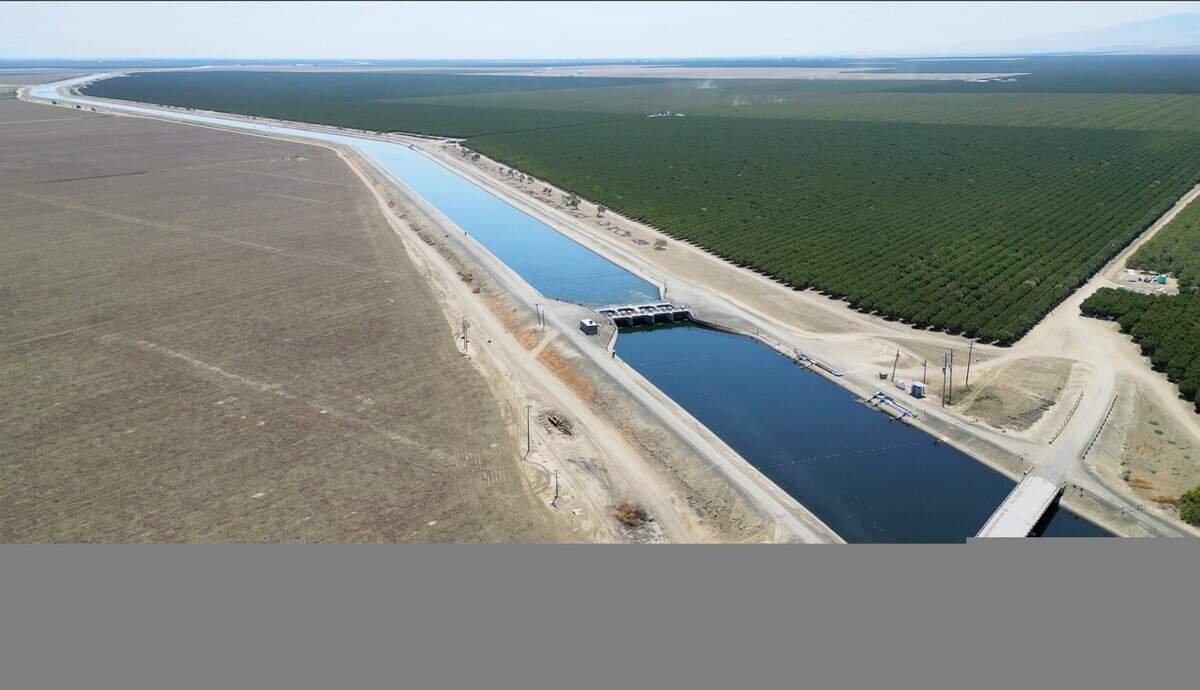
In the Valley, the aqueduct travels through agricultural lands that have historically suffered some of the state’s most extreme subsidence, the term for when the ground sinks or collapses, as farmers pumped too much groundwater to use for their crops. The pumping and sinking have accelerated during drought years, when farmers’ surface water allotments shrink.
The sinking has created “choke points” along the aqueduct in the Valley that keep water from flowing efficiently to the Los Angeles area.
Immediate repairs costing $32 million are necessary, but the state is still waiting on the U.S. Bureau of Reclamation to put up its 45% share of the cost, Dillon said. A long-term solution is also necessary, and the state is searching for an alternative to a reconstruction of the aqueduct that would cost its contractors an estimated $3 billion. Its largest contractor, the Metropolitan Water District of Southern California, would be responsible for 50% of that cost.
It’s too early to tell what the true cost or cost-sharing will look like, but some Metropolitan board members have questioned why Southern California should pay such a large share to fix a problem caused by farmers in the Valley. Others from that district are hoping for collaboration that could include finding groundwater pumpers in the Valley who are liable, as well as seeking other state and federal dollars to pay for the aqueduct’s fix.
But they also say some Valley water agencies are not doing enough to protect the aqueduct from continued ground-sinking as they seek to achieve groundwater sustainability goals mandated by state law.
Valley water groups hardly agree.
“I absolutely disagree with that,” said Allison Febbo, general manager of the Westlands Water District in west Fresno County, which has historically been a hot spot for the ground sinking, which is harming the aqueduct.
Westlands also says a scenario where the aqueduct’s delivery capability drops dramatically is not a realistic one because of the protections for the canal that the west Fresno County district and other water groups are implementing today to prevent it.
CA Aqueduct needs repairs, waiting on feds
Completed in 1967, parts of the aqueduct were originally “overbuilt,” Dillon said, as engineers expected the subsidence already happening at that time to continue.
That original design, along with increased operating levels and longer water pumping times, has helped minimize delivery impacts to just a 3% reduction from its original capability. Dillon said the state tries to constrain its pumping to a time of day when solar energy costs are low.
“As these reductions in capacity continue to ramp up with increased subsidence, we’ll be moving less water,” he said. “The problem is we’ll be moving it at times that are outside the optimum window, which will put more stress on the grid.”
Higher energy costs for the state will trickle down to the state’s contractors and the farmers and homeowners they serve as increased costs per unit of water, Dillon added.
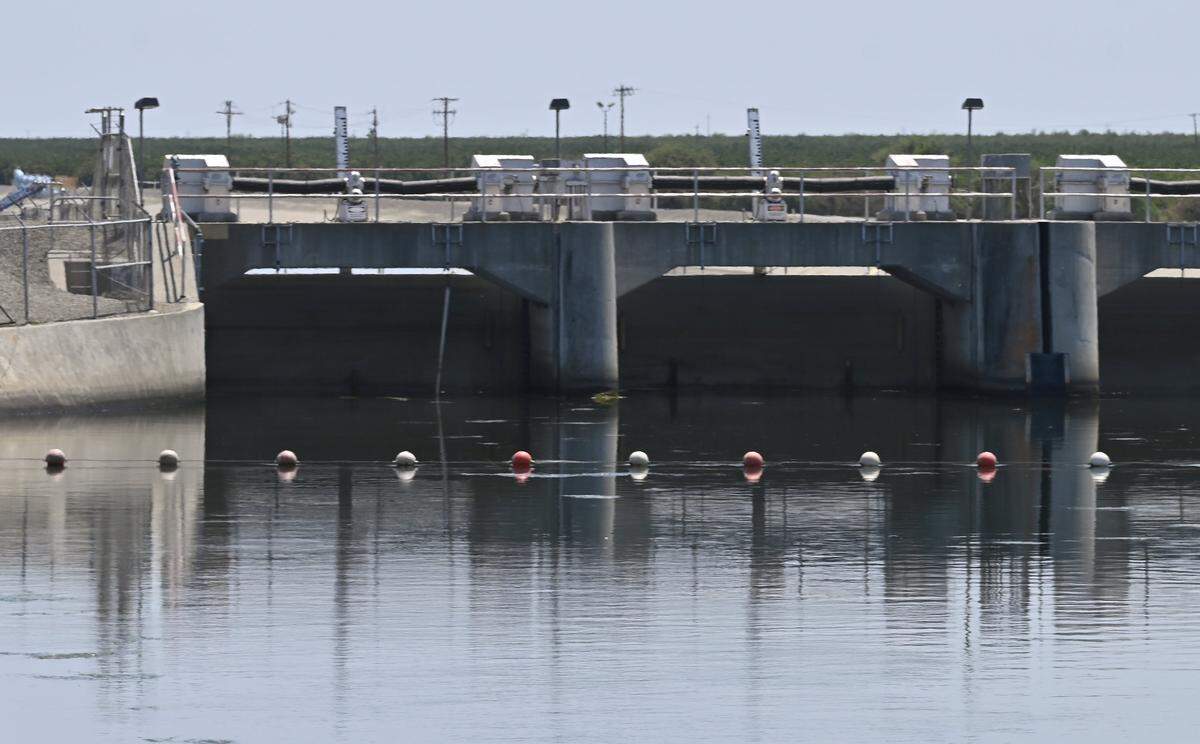
The $32 million in needed repairs would raise the concrete liner on the San Luis Canal, which is the stretch of aqueduct the state shares with the federal government in the Valley. Dillon called it “the worst subsided area where we have the most severe constrictions to the system.”
The state is hoping to begin construction on those repairs in 2027, and Dillon said there are “backup strategies on how we could possibly fund that work.” The U.S. Bureau of Reclamation did not respond to The Bee’s request for comment about its progress on attaining its 45% share of the cost.
The state’s water department has already spent more than $80 million since 2017 to address subsidence along the aqueduct. Dillon said subsidence rates have been low over the past two years in the “choke points” on the San Luis Canal, “but we’re still seeing a decline.”
He said its difficult to quantify how much the aqueduct’s condition could worsen if repairs don’t begin on time. It could depend on how wet the coming years are: Drought conditions, such as those seen in California from 2012-2016, mean more groundwater pumping for farming because there is less surface water to go around.
“But if those projects in the San Luis Canal are delayed,” Dillon said, “there will be diminished capacity to deliver water to Southern California.”
Land-sinking in Westlands Water District
Since the aqueduct’s construction, some of the highest totals of subsidence measured along the canal have occurred in the Westlands Water District.
Westlands delivers aqueduct water to west Fresno County farms as a contractor for the federal Central Valley Project and serves as a groundwater sustainability agency, or GSA, for the Westside Subbasin. GSAs are local agencies created as a result of the Sustainable Groundwater Management Act enacted by the state in 2014, known as SGMA. In severely overdrafted basins, GSAs are tasked with creating and implementing groundwater sustainability plans to achieve certain sustainability goals by 2040.
In a late June presentation to her board, Sarah Bartlett, a program manager for Southern California’s Metropolitan water district, displayed a graphic that showed some areas along the aqueduct in Westlands have measured between 8-9 feet of subsidence since 1967. Westlands’ data shows subsidence in the district since 1967 has measured closer to between 4.5-5 feet.
Westlands was an early implementer of SGMA and adopted its sustainability plan in 2020. Many other groundwater sustainability agencies in the Valley remain without an adopted plan today and are under increasing scrutiny from the state.
But to Metropolitan and the state, Westlands’ 2025 sustainability plan amendment doesn’t do enough to protect the aqueduct. In a critical letter, the state said Westlands’ plan could allow 0.3 feet of subsidence per year for 5 years, which would “negatively impact” the San Luis Canal. The state added that it supports a minimum threshold of 0 feet per year and that “additional subsidence impact on the (canal) is unacceptable.”
Kiti Campbell, Westland’s sustainability plan manager, told The Bee that the district began implementing its groundwater allocation program in 2023, aiming for full implementation by 2030. But the 7 years in between include a “transition period” that considers the possibility of a drought.
“During that period of drought, we would need some flexibility to adjust prior practices to ensure we weren’t significantly impacting the farming economy in the district,” Campbell said. “So over a 5-year period, you might hit one-and-a-half feet (of subsidence). If we were to exceed that, then that would be unreasonable and would lead to undesirable results.”
Campbell said Westland’s gathers subsidence data every three months to ensure that doesn’t happen. She said the district has multiple projects that could be implemented to avoid it, including underground aquifer recharge efforts.
Febbo, the Westlands general manager, reiterated that the district is on its way to groundwater sustainability by 2030.
“Our projections, our modeling and our actual actions are showing that we’re basically halting, and in some cases, reversing subsidence by 2030,” she said.
Who’s to blame for CA Aqueduct damage?
After hearing Bartlett’s presentation in late June, Metropolitan board member Mark Gold called it “disturbing” that the Southern California district would be responsible for 50% of a $3 billion reconstruction of the aqueduct.
“Half would fall on us even though we caused none of the subsidence whatsoever,” he said during the board meeting. “Why would we be on the hook for paying such a substantial portion of that?”
But Febbo told The Bee the groundwater overdraft and resulting subsidence problem stems from farmers not having access to enough surface water. Westlands was created in the 1950s with the intention of providing more surface water to west Fresno County agriculture, which by then had already caused “severe overdrafts, widespread land subsidence and other environmental damage,” according to the district’s website.
In the 1990s, following a severe years-long drought, federal policy decisions meant to protect endangered species began diverting surface water away from agriculture by keeping more of it in rivers and streams.
Febbo said those decisions were made with the understanding that California farmers would make up the reduction in surface water supply by pumping more groundwater — which was widely unregulated at the time.
“And our water users did,” she said. “Some are still here, some are not still here. It’s been decades.”
John Bednarksi, Metropolitan’s assistant general manager of water resources, told The Bee that by-and-large his board is not looking for “a singular answer, but a combination of actions that can be taken.”
“Because there’s more than just Metropolitan that’s impacted,” he said.
Dillon, the state engineer, said although it’s a very “intertwined and complex situation,” there is a plan.
“We are exploring every different aspect of this, whether that’s securing federal funding under the One Big, Beautiful Bill Act, or whether it’s state funding,” he said. “It’s going to take federal, it’s going to take state, it’s going to take local.”
Editor’s note: This story has been updated with added context and comments from Westlands.
This story was originally published August 19, 2025 at 12:02 PM.