
Are there more bike lanes in Fresno? Here’s where they are and why they’re here
You’re not seeing double or imagining things: More bright green safety poles are popping up in Fresno’s avenues.
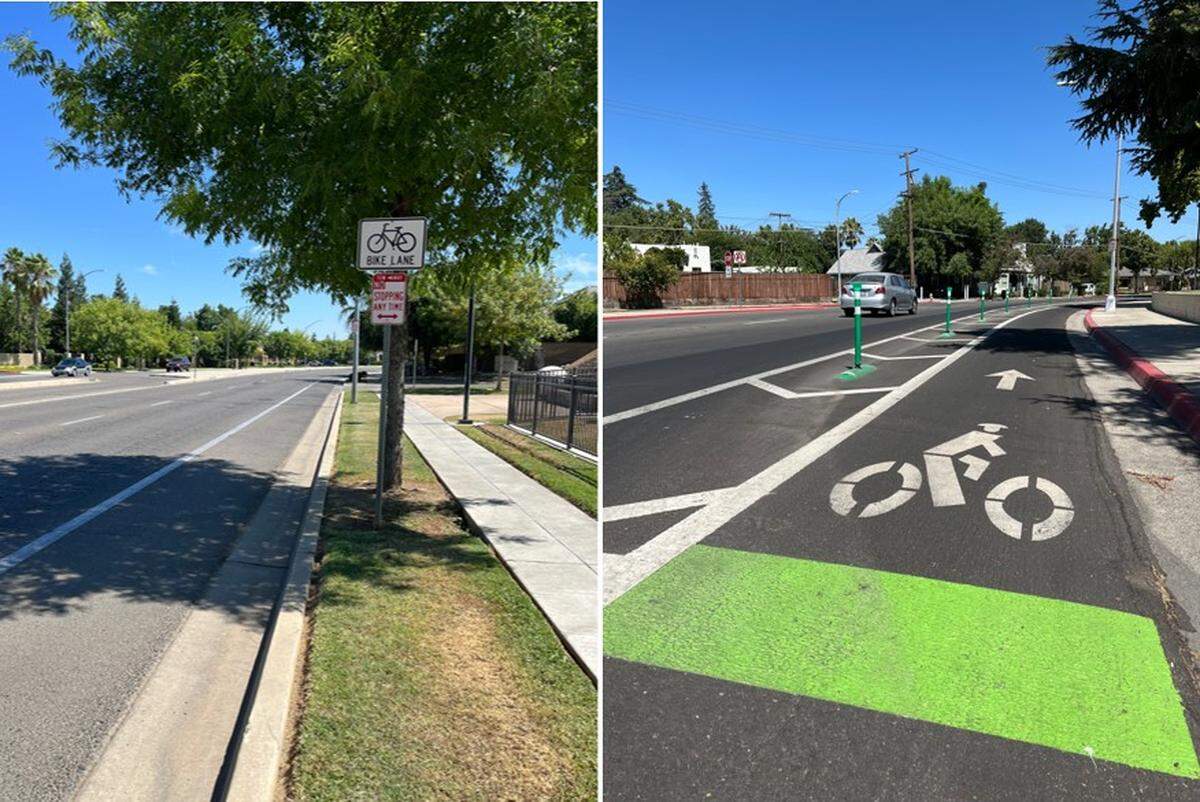
The city has been working on the installation of Class IV bike lanes — buffered bicycle lanes with a painted and/or protective physical barrier – and painting bright green road markings to draw attention to conflict areas between bicyclists and motorists, city spokesperson Sontaya Rose said.
However, bike lanes are not new to Fresno.
“Painted Class II bike lanes have been in place for decades,” Rose said. “The city’s first Class IV bike facilities were installed on R Street, from Tulare Street to Ventura Avenue in 2021.”
As part of Fresno’s Vision Zero plan, attempting to reduce roadway fatalities or severe injuries to zero, these bike lanes could be here to stay.
WHY ARE THESE BIKE LANES HERE?
Fresno ranks among the top 10 cities most dangerous for all road users in the nation. According to a study by Smart Growth America, the city ranked 10th most deadly for pedestrians after Stockton (ninth) and Bakersfield (seventh) in 2022. Fresno also ranked in 7th place as the city where drivers are most likely to get into a car accident in 2023 by Forbes.
Bike lanes can help reduce these dangers on Fresno’s roads, experts say.
Adding bike lanes to urban roads can reduce total crashes by up to 49% in 4-lane and 30% in 2-lane streets and roads, according to the U.S. Department of Transportation’s Federal Highway Administration division (FHWA).
Buffered bike lanes – a designated lane separated with flexible posts and/or marked buffer space – can reduce road crashes up to 53% for bicycle-vehicle crashes, per the FHWA.
“Marking bicycle lanes can also benefit pedestrians,” the FHWA states, “as turning motorists slow and yield more to cyclists, they will by default also be doing so for pedestrians.”
Besides reducing cars’ speed, bike lanes also provide a larger buffer space between people walking on sidewalks and moving vehicles, the FHWA states, and reduce the crossing distance where pedestrians walk in front of motor vehicles.
WHERE ARE BIKE LANES LOCATED?
Down Wishon, up Van Ness and across Barstow avenues, the city’s Public Works Department has made way for new, fresh bike lanes, painted them next to sidewalks and installed protective poles dividing bikers from drivers.
Corridors with buffered bike lanes run through:
Maple Avenue, from Gettysburg to Shaw avenues
Maroa Avenue, from University to Weldon avenues (extension of Van Ness corridor)
Barstow Avenue, from Blackstone to Cedar avenues
Belmont Avenue, from Palm to Blackstone avenues
First Street, from Tulare Street to Hazlewood Boulevard
Palm Avenue, from Dakota to Belmont avenues
R Street, from Tulare Street to Ventura Avenue
Van Ness Avenue, from Elizabeth Street to Weldon Avenue
Wishon Avenue, from Belmont to Weldon avenues
The intersections of Barstow with Blackstone, Van Ness with Olive Avenue, and First with Ventura Avenue – where some of the buffered bike lanes are installed – were among the collision clusters in the area with the most bicycle accidents in a 2017 Fresno-Clovis Metropolitan Area study for the consideration of Class IV bike lanes.
ARE THE BIKE LANES WORKING?
Rose said there is “a lot of positive feedback” from Fresno’s cycling community, pedestrians and the public in general,
“Riders have shared positive experiences and have said they feel less vulnerable on the road with motorized vehicles,” she said, “because the additional buffer reduces the level of traffic stress for bicyclists and allows for more comfort while riding.”
Anthony “Tony” Molina, chair of the Fresno County Bicycle Coalition (FCBC), is “very excited” to see that the city is “moving in the right direction.”
The FCBC is a local, volunteer-run organization dedicated to making Fresno a safer place by advocating and helping to make roads safer, enjoyable and accessible to all road users, specifically bicyclists.
Molina, a general and family medicine doctor, worked at Fresno State’s Student Health Center for 25 years and began his bike lane and safety advocacy during this time there.
“What we are trying to create is lower traffic stress – more space and lower speeds – or traffic calming,” Molina said, “a strategy to reduce the physical risks to cyclists and improve the perception of safety.”
He said slower traffic speeds are beneficial to all road users because it reduces the likelihood of vehicles crashing as well as dangers to vulnerable road users like pedestrians and bicyclists.
Though Molina believes there still can be improvements to the city’s bicycle lanes, he encourages Fresnans to try them out.
Not only is it a more sustainable and environmentally friendly mode of transportation, but it also provides health benefits, improving metabolism and blood pressure, for example, and helps build community, he said.
For those concerned about Fresno’s weather – high temperatures and air pollution – Molina advises everyone to be smart and thoughtful about how and when they bike. Consider the clothes you are wearing, consider and prepare for the time of day you want to ride and look at the Air Quality Index (AQI) on your weather app of choice to make a decision.
RESOURCES FOR COMMUNITY CYCLISTS
For Fresno motor vehicle drivers, pedestrians and cyclists alike, there is an array of free and public resources for all to access to either inform themselves about bike lanes or take it a step further and go for a ride:
Community cycling groups, like the Fresno County Bicycle Coalition and Fresno Cycling Club host group rides.
FCBC’S Fresno Bike Station, monthly pop-ups where bikes can be fixed for free, details on Facebook.
Fresno County Sheriff’s Office resources, for laws and regulations on bike lane use.
The Department of Motor Vehicles, to learn about safety tips and cyclists’ road and/or hand signals.
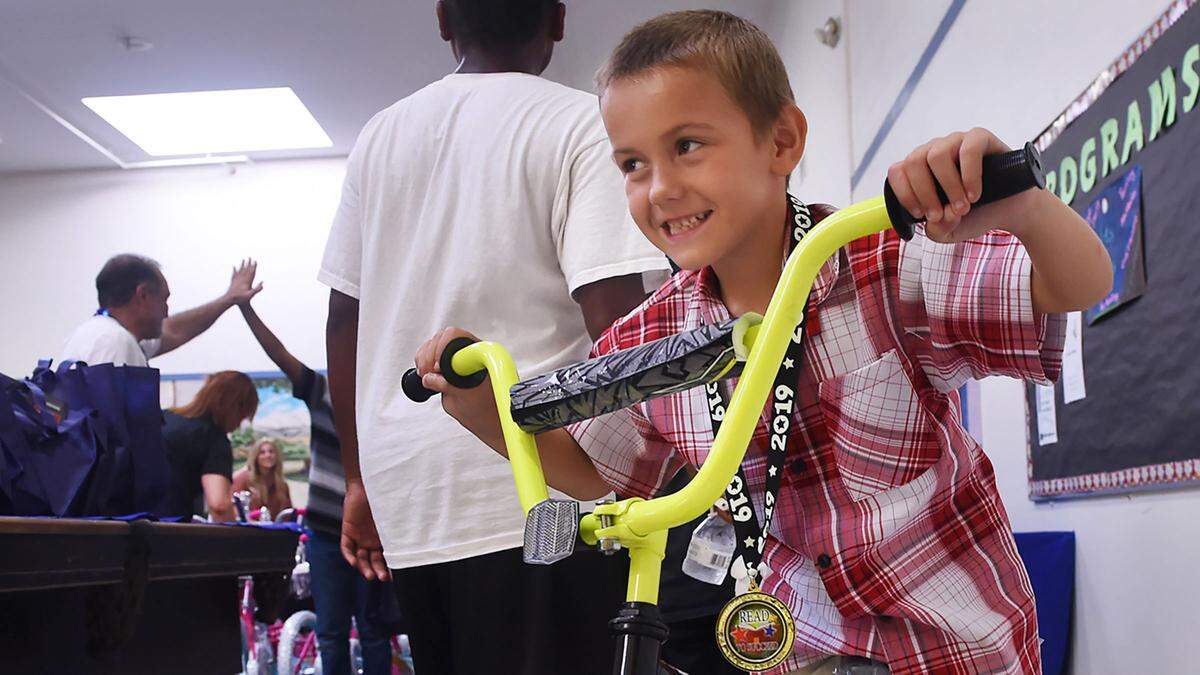
Fresno Fire Chief’s Foundation’s “Helmets are Cool” program, where children in K-12 throughout the Fresno-Clovis Metropolitan Area can receive a free helmet and safety tips.
What do you want to know about life in Fresno? Ask our journalism team your top-of-mind questions via email at news@fresnobee.com.
This story was originally published December 22, 2023 at 5:30 AM.