
Summer’s the best time to use this ecologically friendly way of killing weeds and pests
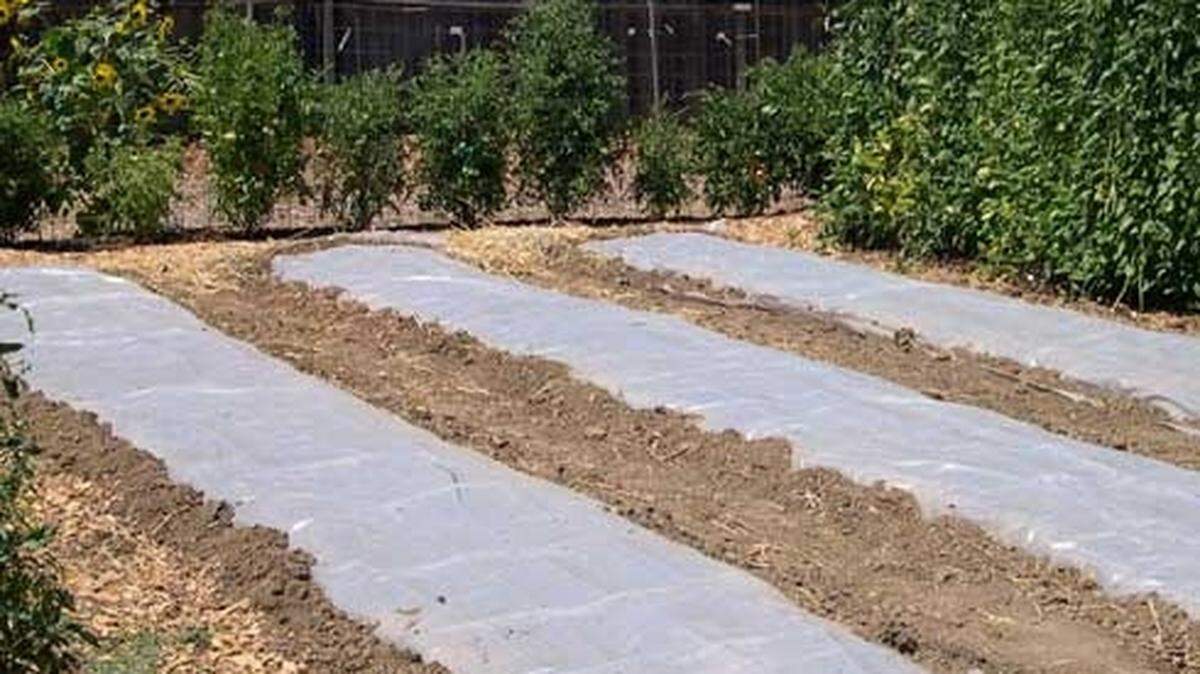
CORRECTION: A photo originally published with this column was removed because it did not show soil solarization as suggested in the caption. The current photo provided by the University of California shows a backyard garden undergoing soil solarization.
Last week’s column dealt with soil problems that are common in the central San Joaquin Valley and that become more apparent just as summer vegetables are ripening. Fusarium wilt and verticillium wilt are fungal diseases; the effects of these wilts show up in the middle of the growing season. Bottom leaves turn yellow and then fall off or just one side of a plant may have yellowing leaves. The plants are slow to grow, set few flowers and fruit, and slowly die. When a stem is cut across, the inner tissue will show a black or brownish ring.
Root knot nematodes are microscopic worms that feed on roots also causing slow growth and limiting flower and fruit production. When sickly plants are pulled out, small knots or galls can be seen lining the roots.
Wilts and nematodes can be controlled if not eradicated by soil solarization. Most annual weeds and their seeds are also killed by solarization. Perennial weeds including Bermuda grass and purple and yellow nutgrasses and their seeds are a little harder to kill. The roots, rhizomes, stolons and bulblets within the top inches of soil will die but those lower down will survive.
Soil solarization is most effective in the hottest summer months that are just ahead of us. Soil solarization uses the heat from the sun’s rays to essentially bake the soil to a temperature of up to 140 degrees in the top 2 inches and 90 to 99 degrees at 18 inches. It takes four to six weeks of solarization to fully control most disease pathogens, weeds and weed seeds, and pest insects and their eggs.
The first step in solarization (before laying down a plastic tarp) is to clean out all rocks, weeds and debris from the area and then level the soil as best as possible. Air pockets under the plastic reduce soil heating. Biosolarization or adding smaller amounts of organic compost to the soil before solarizing is still in the experimental stages, but results in heat increase so far are promising.
Deep irrigate the soil to a depth of 12 inches. Wet soil conducts heat better than dry.
Lay down a clear plastic tarp to completely cover the area with about 6 inches per side extra. Thinner plastic (1 millimeter) is cheaper and lets more sun’s rays through thereby increasing soil temperatures. It also tears more easily and catches the wind. Thinner plastic tarps or “painter’s plastic” will deteriorate fairly quickly under our intense summer UV rays; monitor for breaks or tears and replace the plastic if necessary. Thicker plastic (1.5 millimeters to 4 millimeters) lasts longer and is easier to manipulate.
Seal the edges with soil, rocks or bricks and stretch the plastic to form a tight seal against the soil. A double layer of plastic with air space between sheets has been found to raise soil temperatures another 2 to 10 degrees. Use plastic bottles or PVC pipe as spacers.
One of the unexpected benefits of soil solarization is that after the process, plants grow better and faster. Nutrient levels increase as do numbers of beneficial microorganisms after soil has been solarized.
This story was originally published June 27, 2019 at 12:00 AM.