
All you need to know about fertilizing plants, trees, lawns, vegetables and bushes
In the central San Joaquin Valley, we stop fertilizing during our brief winter dormancy period and resume feeding plants, trees and bushes in mid to late February when new growth begins to appear.
Here’s a schedule for fertilizing plants commonly found in our Valley gardens. If your plant or tree is not on this list, you should be able to find fertilization recommendations in Sunset’s “Western Garden Book” and in the Fresno County Master Gardener’s “A Gardener’s Companion for the San Joaquin Valley,” which is available at several local nurseries and at the UCCE office in Fresno.
Roses – Give roses their first feeding of the growing season when new growth is 1 1/2 inches long. A cup per bush of a low-nitrogen granular food is fine; a springtime feeding of special formulations that contain additional supplemental nutrients such as “Bill’s Rose Formula” which includes iron, Epsom salts (magnesium sulphate) and alfalfa will act as a spring tonic for roses.
Feed roses monthly from February until late September with a cup per bush of a low-nitrogen rose or vegetable food such as a 4-6-3 formulation.
Citrus – Citrus are fed three times annually. A mature tree will require about 5 pounds of nitrogen divided into three feedings. Ammonium sulphate is high in the nitrogen citrus need. Good quality lawn foods and citrus foods also contain sufficient nitrogen plus additional nutrients. Give the first feeding in late February, the second at fruit set and the final in late May.
Lawns – Cool-grasses including fescues and perennial rye will need monthly feeding during the spring months, no feeding during the hot summer months when they are dormant, and feeding in fall until mid-November. Warm-season grasses such as Bermuda should be fed monthly from April until October. A high-nitrogen fertilizer is fine for both types of grasses.
Deciduous fruit and nut trees – Fruit and nut trees should be fed three times annually: in early spring when new growth appears; in fall after harvest; and in mid-November as trees enter dormancy. A cup of a high-nitrogen fertilizer per feeding should be enough for a mid-size tree.
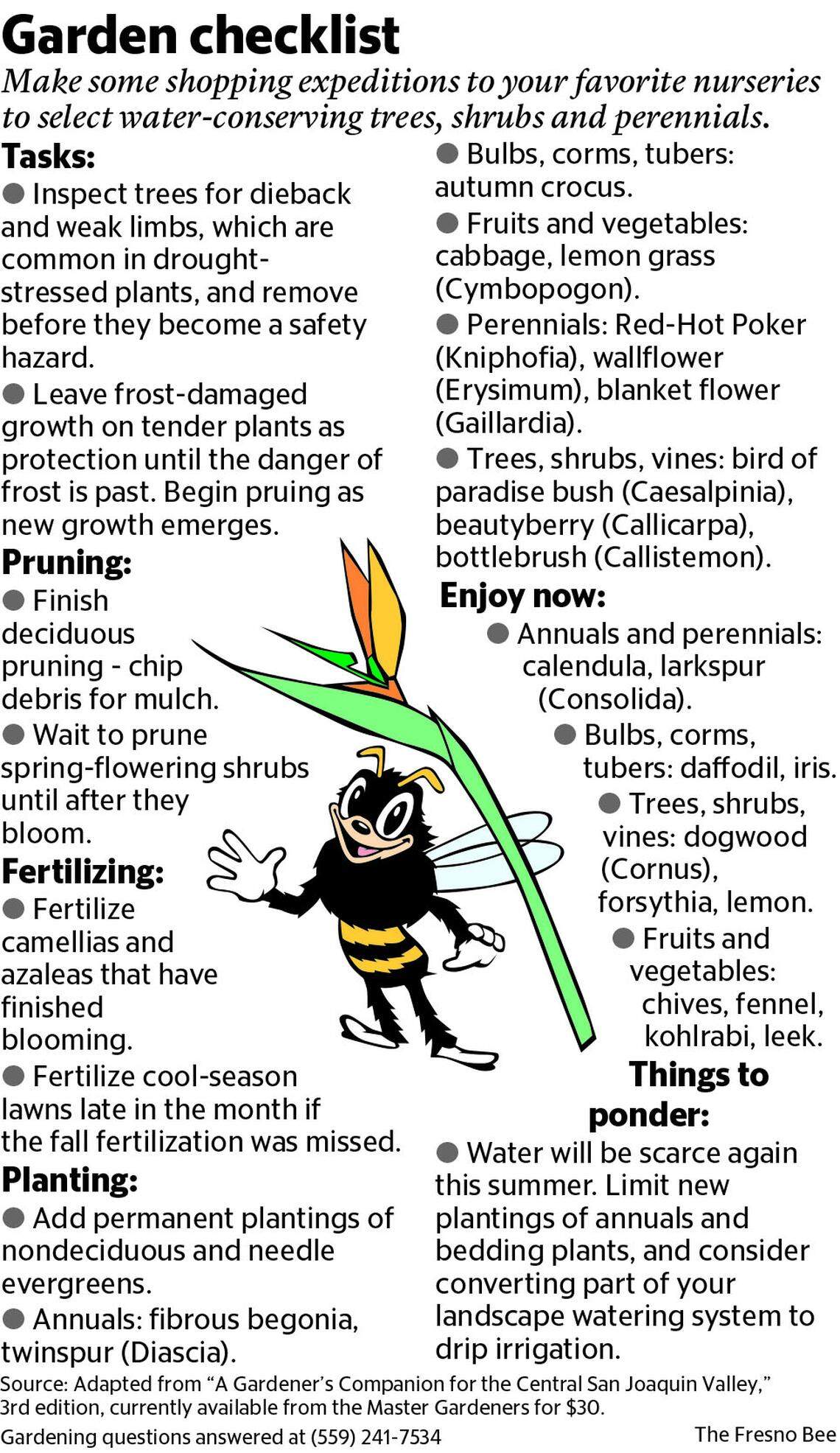
Spring-blooming trees and bushes – Feed camellias, azaleas, hydrangeas and lilacs monthly during the spring/summer after bloom has finished. Apply shade plant formulations that contain additional sulphur (at least 3 percent) to lower our high pH levels. Follow recommended amounts on the product label.
Transplants and seedlings of spring or summer vegetables and flowering annuals – Starter or root zone fertilizers provide small amounts of nutrients to young plants, most importantly phosphorus (the middle number of three on the label). Phosphorus encourages good root development, but phosphorus is not mobile in the soil. Starter fertilizer should be applied to the root zones of transplants and seedlings to be most effective. Use starter fertilizers when planting in cold, wet early spring weather; during warmer, drier weather, wait two weeks after transplanting to fertilize and then apply a regular formulation at half the recommended rate.
Cool-season and warm-season vegetables and flowering annuals – Regular, consistent fertilization is key to healthy, vigorous, productive plants. Mark your calendar to set a monthly time to feed your veggies and flowers. Low-nitrogen/higher phosphorus granular formulations will continue to furnish nutrients throughout the month; liquid formulations will dissipate from the soil within two to three weeks.