
Don’t be too anxious to give your garden a winter cleanup, pruning
This last winter was extremely brief. Warmer than normal temperatures lasted until mid-December, then we had a few nights of below freezing temperatures during the holiday season followed by a month of fairly warm, rainy conditions.
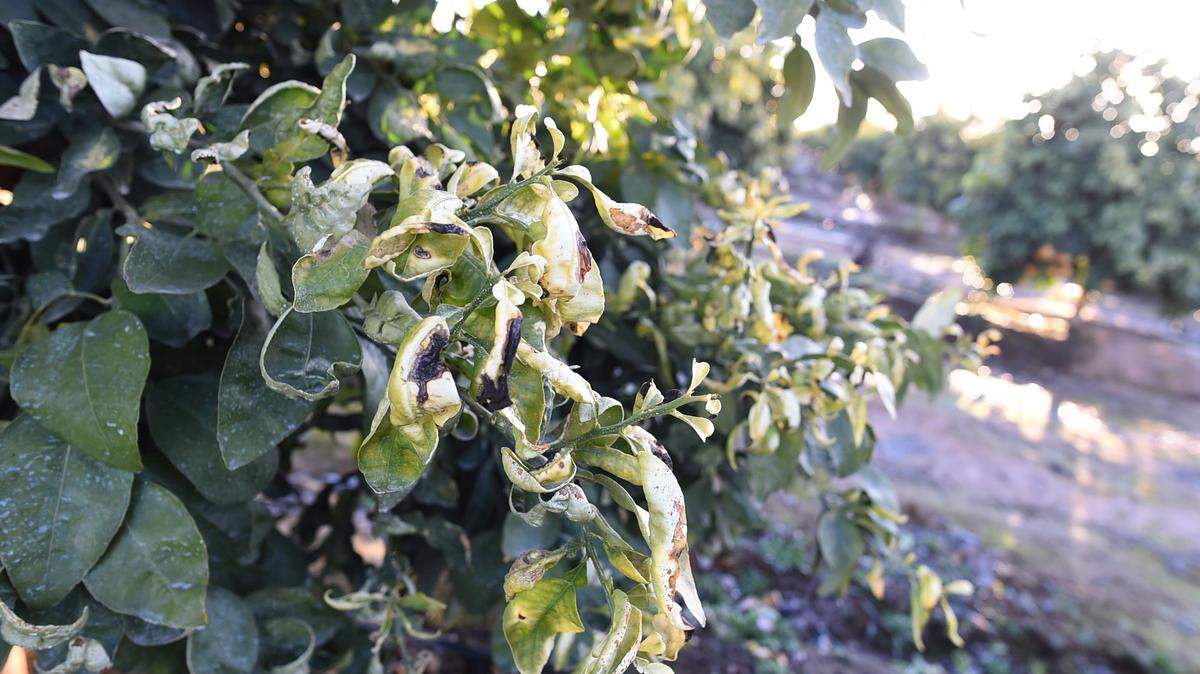
Because temperatures in November and December were warmer than usual, many plants and trees had not fully entered into winter dormancy before the cold temperatures arrived. Freeze damage may be more apparent and more severe on some plants, depending on species and on location in the garden. Other plants and trees may show no damage at all and may already be showing new growth and setting new buds.
Often, a gardener’s first reaction to seeing brown leaves and dead-looking twigs or branches on plants after a freeze is to trim off the dead wood and to fertilize. Let patience be your guide to caring for freeze-damaged plants.
Some freeze damage may be obvious, especially on subtropical plants. The leaves and stalks on bananas and cannas turn brown and fall over after freeze damage; wax begonia leaves turn into a gelatinous blob. If you can stand the mess in your garden, just leave the dead leaves and stalks where they are for another two or three weeks to form a protective covering over the underground tubers which will soon send up new sprouts. If you feel the need to remove the dead leaves, be gentle. Try not to damage emerging sprouts and use a two to three-inch layer of humus or compost to cover and protect the new shoots.
Citrus and bougainvillea twig dieback might seem severe on plants or trees that were not well protected from the cold. Before beginning to prune or trim seemingly dead wood, use the scratch test to check for live tissue underneath the bark. Use your fingernail or a small, sharp knife to lightly scratch the bark. If the underlying tissue is green, it’s still live; if it’s brown, it’s dead. To avoid removing live wood, wait patiently to prune until new growth appears on the branches in a month or two.
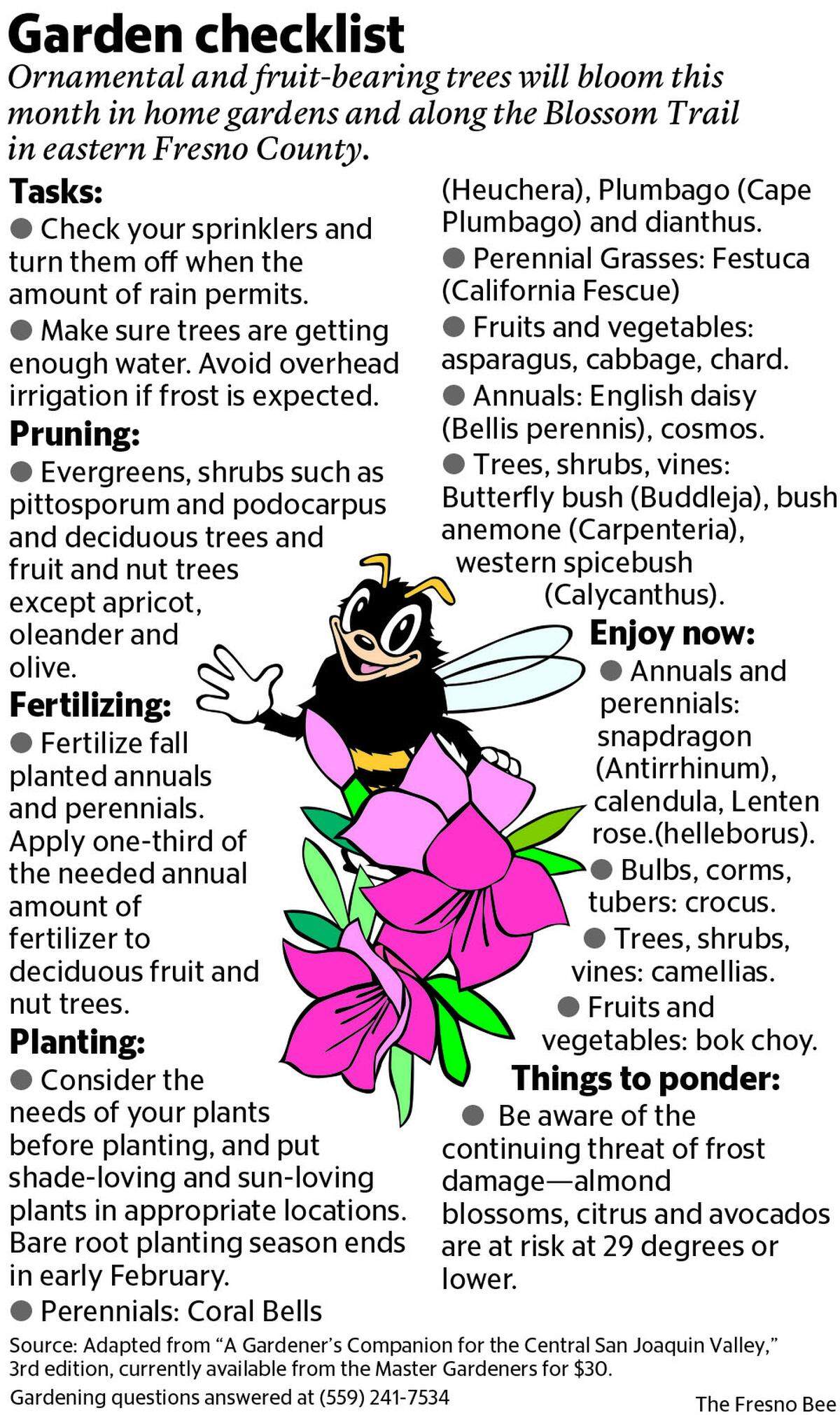
Resume fertilization this next month – on the normal schedule.
Scion exchange
The Sequoia Chapter of the Rare Fruit Growers will hold its 2019 scion exchange and workshops on Saturday, Feb. 2. Scions (to be grafted onto your own backyard fruit trees) of many varieties of apples and pears, stone fruits including cherries as well as persimmon scions will be available. Fig, berry, pomegranate and grape cuttings (for root propagation) will also be offered. Cuttings and scions are free as is admission; rootstocks donated by local wholesale propagating nurseries are $5 and subject to availability.
This is a great opportunity to add rare or unusual fruit varieties to your garden and to learn about grafting from the experts.
The scion exchange will take place at the Horticulture Unit, College of the Sequoias, 4999 E. Bardsley Ave. in Tulare from 10 a.m. to noon.
Grafting workshops by master grafter Walter Thoma and L. E. Cooke Nursery Associates will also be offered.
All proceeds will be donated to the horticulture club of the College of the Sequoias, Tulare. For more information, call 559-799-5010 or 559-322-4695.