
It’s time to get the pruning shears out. Here’s four tips for success
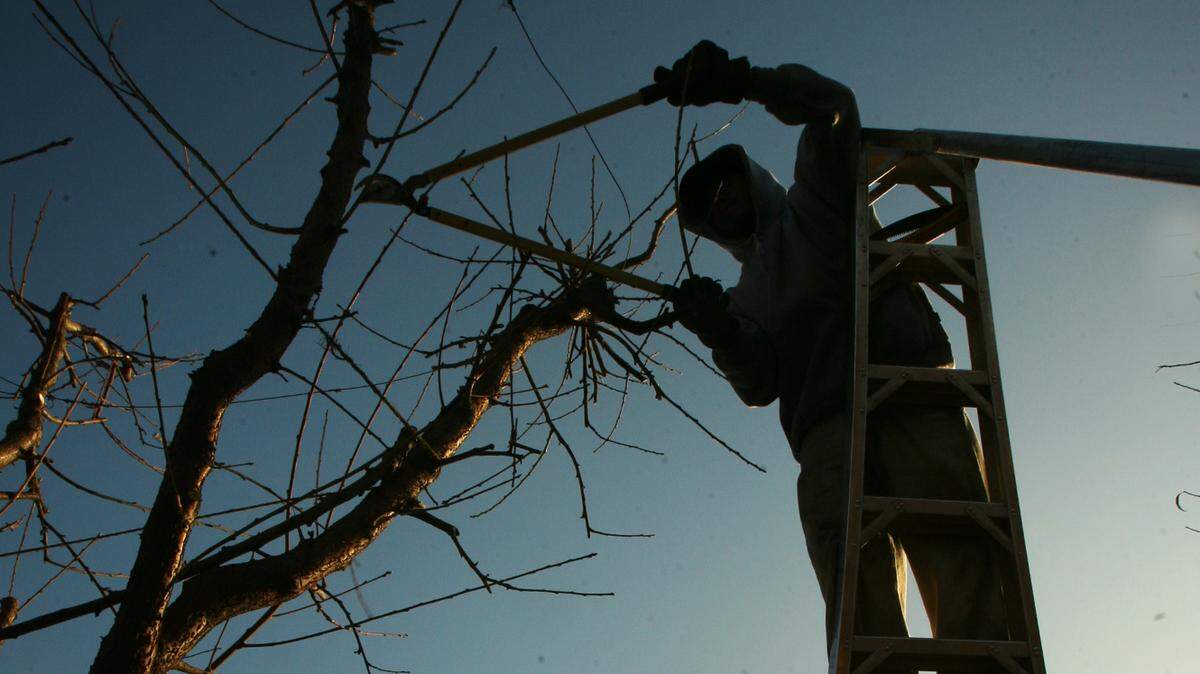
Pruning any deciduous tree or bush can begin as soon as all the leaves have fallen. A leafless tree in fall or winter is a signal that the tree has entered dormancy, the sap is not rising, and that it’s safe to make major cuts into branches and bark.
You’ll notice that the trees and bushes in your yard lose their leaves in succession in fall, generally depending on the species . Sycamores and ginkos tend to be among the first trees to lose their leaves in late October and Japanese maples and crape myrtles can be among the last to lose their leaves in late January and February.
Consider spreading out the hard work of winter pruning over the next 10 weeks. Sharpen you pruning shears, loppers and saws now and prune your trees and bushes after each has lost its leaves.
Good pruning properly maintains the natural shape of the tree or bush, maintains the necessary size, and prevents branches or trunks from becoming a hazard. It’s simpler than the average gardener might think. Here are the first steps in good pruning that will actually nearly finish the job.
Cut out dead wood – It’s not always easy to identify dead wood on a leafless tree, but a simple scratch test will make it obvious. Use your fingernail or a sharp knife to lightly scratch the bark; if the tissue just underneath the bark is green, the branch is alive. If the tissue is brown, it’s dead.
Make all cuts back to another branch junction or to the trunk. Never leave stumps that can provide an entryway for disease pathogens into healthy tissue.
Cuts made just in front of the branch collar, a raised ridge where branches join together or join the trunk, will self-seal. No need to paint the cuts.
Cut out diseased wood – Oozing sap (gummosis) and sunken lesions on branches and trunks indicate that some sort of disease or injury is affecting the tree. Home gardeners can try cutting off smaller branches with signs of disease or injury and then wait and watch for any progression, but should consult with a certified arborist to identify problems on larger branches or the trunk.
Cut out congested inner growth – Congested inner branch growth interferes with good air flow, blocks sunlight from reaching interior branch wood, and provides hiding places for pest insects. As you begin to clean out congested growth inside a tree or bush canopy, you’ll find that many of the branches are dead. Sheared bushes including euryops, carpet roses and azaleas often have a lot of dead wood in their centers. Cut all congested growth, dead or alive, back to a branch junction or the trunk.
Cut off all suckers and water sprouts – Suckers grow from the root system and water sprouts emerge along the trunk. Cutting them off directs growth energy and nutrients back to the tree or bush.
Step back from the tree and check out your work. The tree or bush canopy should be more open now so that you can easily see the branch structure. In many cases, your work will be done or nearly done. More in next week’s column on further pruning if necessary.