
Heat stress happens to indoor plants, too. Follow these tips for a happier window sill
Outdoor plantings clearly suffer from heat stress, low soil moisture and low humidity during the long, hot, dry summers here in the central San Joaquin Valley. It might not be as obvious that house plants are also stressed by high indoor temperatures and very low indoor humidity levels in summer.
Two perennial favorite houseplants, African violets and orchids, are very susceptible to summertime heat stress and dry conditions. African violets become semi-dormant so that growth and flower production slows significantly. Orchids are often either overwatered or kept too dry; their psuedobulbs that store water rot or dry out.
Here are a few tips to bring African violets and orchids back in to good health and ready to bloom again this fall.
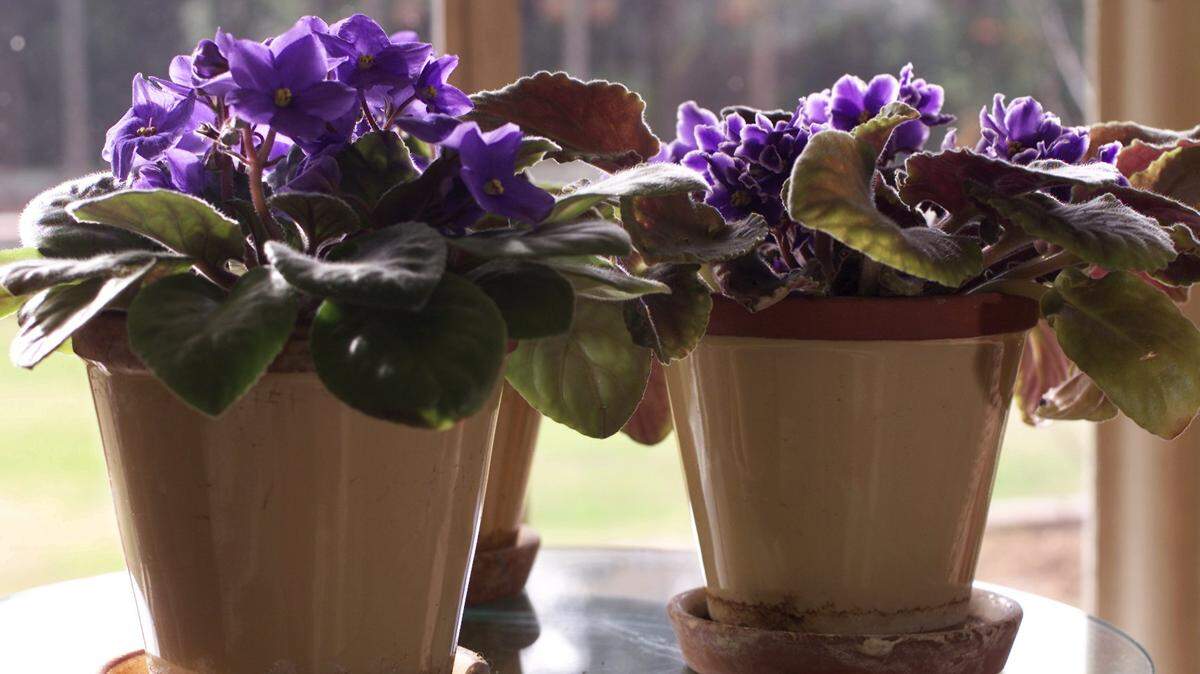
African violets
African violets (as well as Cape primroses, another member of the Gesneriad plant family) normally bloom for 10 months a year, taking a brief resting period in mid-winter. One major sign of stress for a flowering houseplant is failure to set blossoms when expected. During our summers, it is very difficult for us to create and maintain the moderate to warm temperatures (68 degrees during the day and 65 or less at night) and the moderate to high humidity (30 percent to 40 percent) that African violets require for continuous flowering. Indoor daytime and nighttime temps are in the mid to high 70s with humidity levels below 20 percent. Humidity levels can be raised by placing the pots on pebble trays and by misting daily, but we can’t do much about the high temperatures.
It’s very common for the soil in an African violet pot to have dried out partially once or twice in summer. Potting soil mixes for African violets contain peat which dries rock-hard if the soil is not kept consistently moist. If water doesn’t drain out the hole, soak the pot in a sink full of tepid water until air bubbles stop popping. Potting soil will lose its ability to retain water within a year or two.
Repotting your African violets every fall is a good practice. Resume feeding African violets now to enjoy the fall rebloom.
Orchids
Phalaenopsis or moth orchids are the most popular species. All orchids require high humidity and temperatures around 70 degrees in summer with cooler nights to thrive. Most orchids formerly were sold potted in orchid or epiphytic barks, but many commercial growers now sell their orchids potted into a moss mix that is kept inside a plastic holder or sleeve within the pot. Moss mixes hold water better and longer than orchid barks, but they easily become over-saturated. The roots soon fill the inner plastic sleeve and begin to rot.
Repot any orchid in a pot without a drain hole into one with a hole. Consider repotting a newly purchased orchid into fresh orchid bark. Thoroughly soak the orchid bark once a month in summer (a stream of tepid water in the sink works well) and add only a tablespoon or two of water every week.
Feed orchids monthly in summer and into winter with a liquid orchid food. Look for new flower stalks in February/March.