
Bees are buzzing around your garden again. Here’s how you can help them thrive
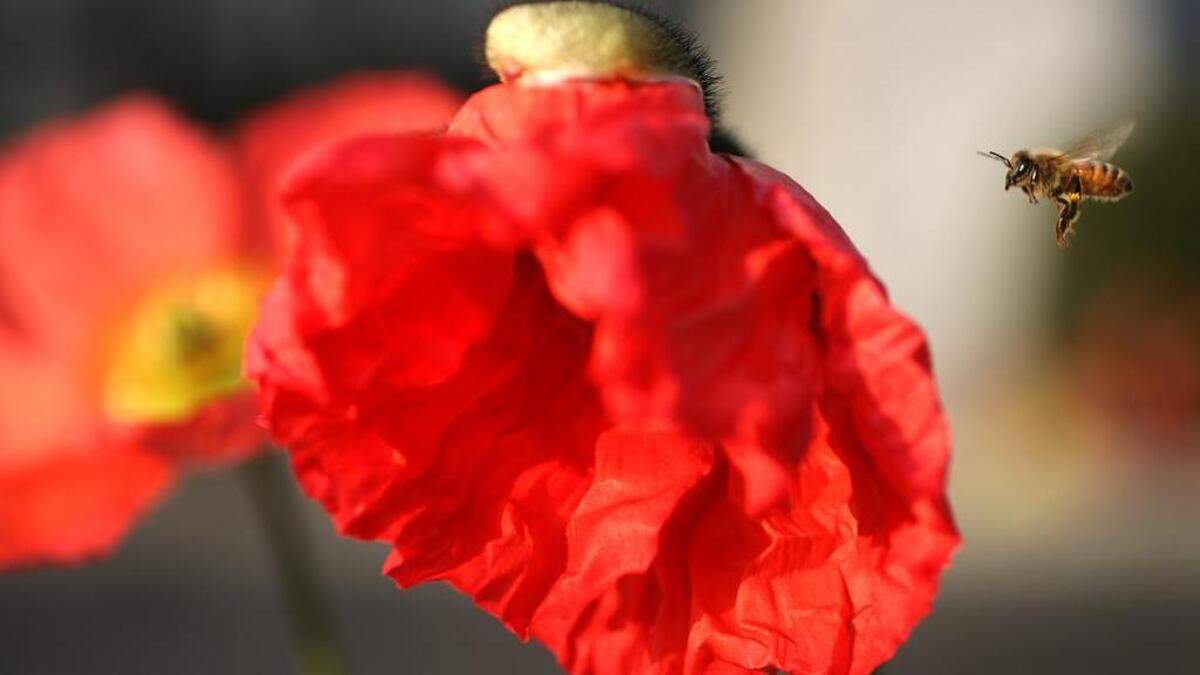
As the summer heat abates in mid-September, summer-blooming annuals and perennials start a secondary bloom cycle. In mid-September, bees resume their spring-like foraging activity levels after hanging out in the hive during summer hot spells, fanning themselves. They need to make enough honey to make it through a flowerless winter. This late-season bloom cycle is critical to the health and vigor of our native California bees as well as European honey bees.
All species of bees are drawn to three types of flowers in their search for nectar and pollen: those with open pollen-filled centers (rudbeckia, zinnias), tubular flowers (gladioli, penstemon) and umbrella-shaped flower clusters (yarrows, Queen Anne’s lace). The ideal bee-friendly garden should contain all three types of flowers and each species should be planted to form a patch that can reach 3 feet wide in size. One or two nepeta plants will form a large enough clump, but you might need to plant a patch of six or eight coreopsis to create the same size planting.
Some summer bloomers – including bee-favorites tickseed or coreopsis, goldenrod or solidago, gaillardia, yarrows, roses, Santa Barbara daisy or erigeron, catmint or nepeta) – rebloom in fall with a full crop of flowers but will need dead-heading before they can set more blooms. Snip off all the dead flowers and feed the plants monthly in September and October with half the recommended rate of a low-nitrogen, high-phosphorus fertilizer such as a 4-6-2 formulation which will promote good flower bud production and less green growth until the first frost stops flower production.
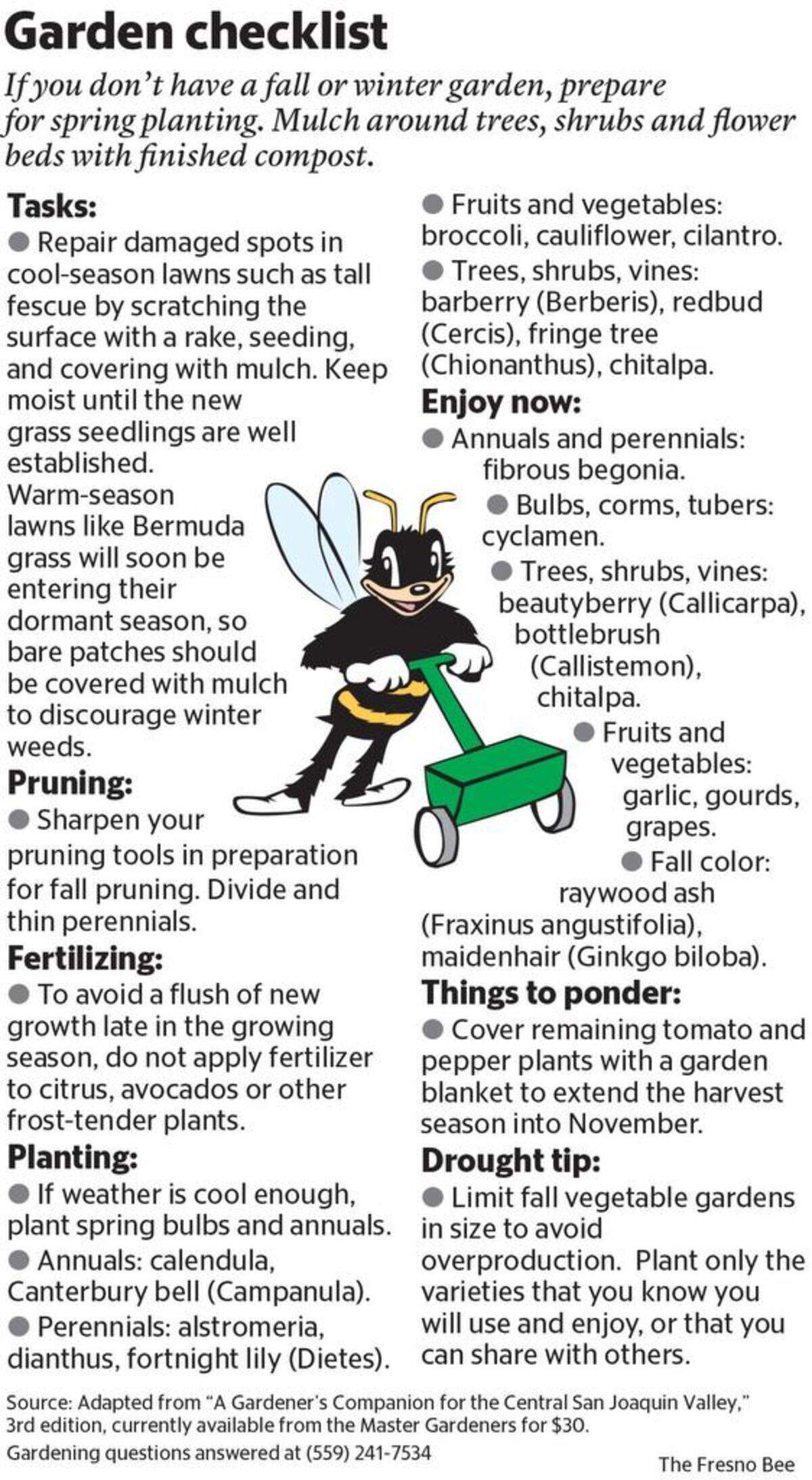
Other bee-friendly plants such as scabiosa, many lavender species and scented geraniums produce a very light fall crop of flowers. Keep them dead-headed and fed as well to provide the varied types of flowers needed. Visit nurseries and garden centers in the next few weeks to check out what’s in flower, what flower type it is, and its eventual size. If you find repeat-flowering lavender varieties this fall, buy a few but remember to place them in the same irrigation zones as other drought-tolerant plants. Chrysanthemums are a good bee-friendly choice in fall; a fairly recently introduced chrysanthemum that does well in our climate, producing a heavy fall crop, is nipponanthemum, a daisy-like Japanese native.
Pumpkin, squashes and melons and all members of the cucurbit family can only be pollinated by bees. Keep those plants producing flowers this fall by feeding them the same low-nitrogen food and keeping the soil consistently moist. Harvest regularly, especially zucchini and other squashes, to encourage more flowering. Peas planted from seed in September might have time to set bee-attracting flowers before the first frost.
Provide cool, clear trickling water for the thirsty bees. Maybe a fountain with a gentle splash and rough concrete edges so that bees don’t fall in while they’re sipping – they stand and sip for a long time!. Bees will also drink from hose nibs and drip irrigation emitters.
Avoid spraying any chemical pesticides, insecticidal soaps or horticultural oils when bees are foraging during the day.
Elinor Teague: etgrow@comcast.net
This story was originally published September 20, 2018 at 1:25 AM with the headline "Bees are buzzing around your garden again. Here’s how you can help them thrive."