
Are your plants suffering in their current locations? Now’s the time for a transplant
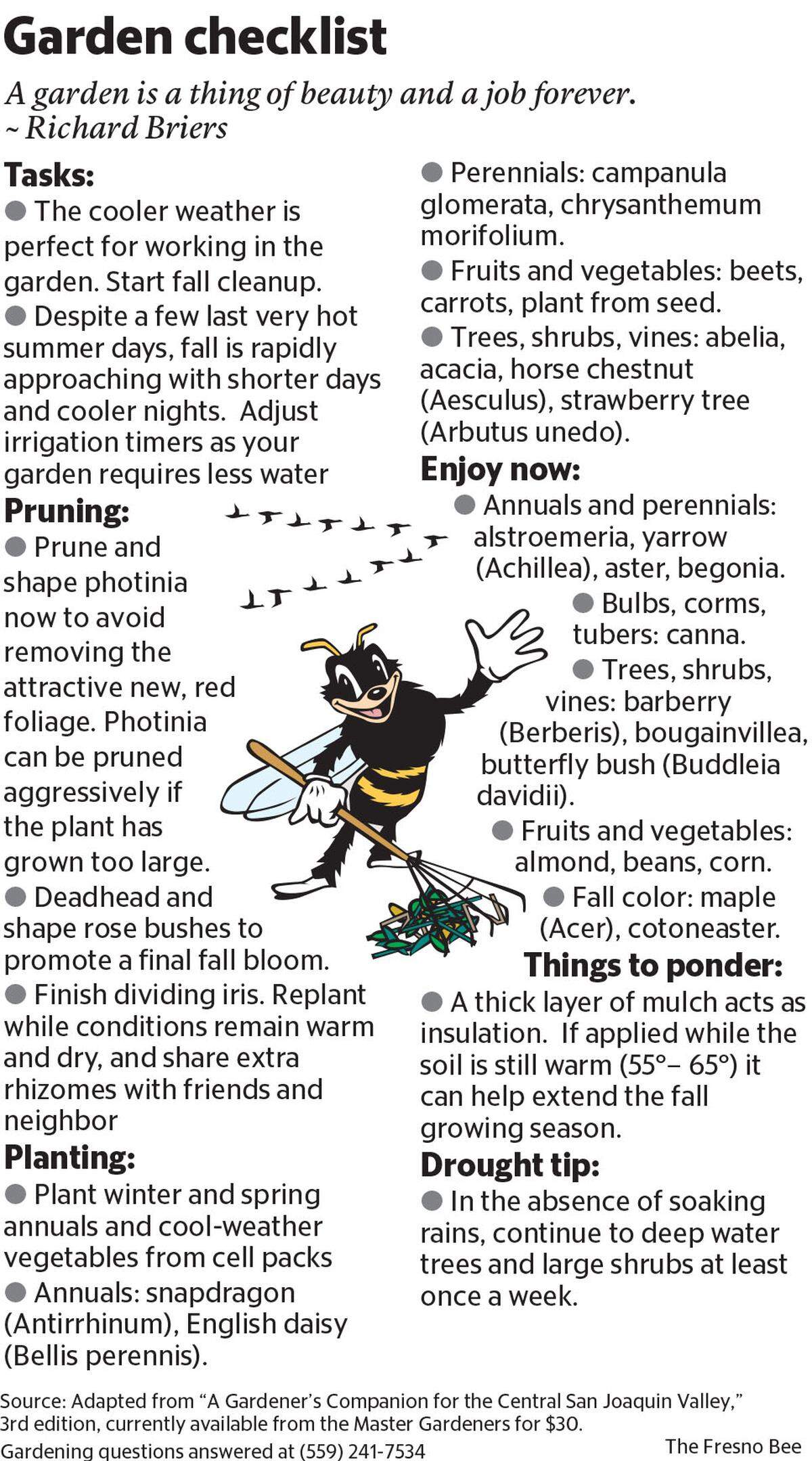
September and October are the best months to transplant smaller trees and bushes here in the central San Joaquin Valley. Cooler fall temperatures reduce the chances of heat stress and our two- to three-month fall growing season allows ample time for roots to become well-established before winter dormancy sets in.
So many trees and perennial bushes have been planted in the wrong spots in Valley gardens. If your roses are leggy and plagued with powdery mildew or the leaves on your Japanese maples and azaleas fry brown and crispy every summer, they’re undoubtedly planted in the wrong spot. This is the best time to transplant them to a better spot.
A little understanding of what makes one spot in the garden more suitable for a specific plant might help you make the move that will bring out the beauty of your suffering tree or bush.
Good plant labels should provide information on water needs, size at maturity and, most importantly in our planting zones, sun or shade requirements. It’s the designations of “full sun” or “partial shade” that most lead Valley gardeners into planting in the wrong spot here.
“Full sun” indicates that the tree or bush should receive at least six hours of sunlight each day. In the Valley, trees and bushes planted in full sun can receive up to 14 hours per day of brutal intense rays in July and August – enough to cause severe sunburn on bark and leaves. Sun-loving plants like roses and other summer-flowering perennials will do best with a maximum of eight to 10 hours of morning or midday sun but shade in the hot afternoons.
Roses are one example of sun-loving plants that, when planted in shadier spots where they receive less than six hours of sun per day, become leggy as the weak canes or stems stretch toward the available light and become susceptible to fungal diseases and pest insect problems.
The labels on Japanese maples and azaleas advise planting in “partial shade.” Partial shade is found in the dappled light provided throughout the day by large open tree canopies or on the eastern sides of structures where plants can receive 4 to 6 hours of morning sun every day. As the angle of the sun rises in the sky during summer, plantings on the north side of structures might receive an hour or two more of slanted morning or very late afternoon sunlight to total four hours at least. That’s fine for deciduous Japanese maples and evergreen azaleas. Dogwoods, hydrangeas and heucheras or coral bells are examples of other perennial plants that do best in true partial shade.
Concerts in the garden
The Clovis Botanical Garden at 945 N. Clovis Ave. in Clovis once again presents the Twilight Thursday Concert Series, four consecutive Thursdays beginning Sept. 13. Each is from 5:30 to 7 p.m. Admission is free.
Enjoy live music in the Garden Pavilion and bring your own picnic dinner. Seating is provided. Cold drinks and desserts will be available for purchase.
For a listing of performers, go to the Clovis Botanical website, www.clovisbotanicalgarden.org.