Central Valley couple’s colorful Day of the Dead dresses are a local hit. See their work
AI-generated summary reviewed by our newsroom.
- Leticia Valencia crafts annual La Catrina dresses to teach Mexican heritage.
- She designs themed annual ensembles, uses stilts to bring La Catrina to life.
- Local presentations and travel expand La Catrina de Visalia’s cultural reach.
For more than a decade, Leticia Valencia of Visalia has brought to life the Mexican cultural icon La Catrina, an iconic skeletal figure of the Mexican Day of the Dead that satirizes the wealthy elite.
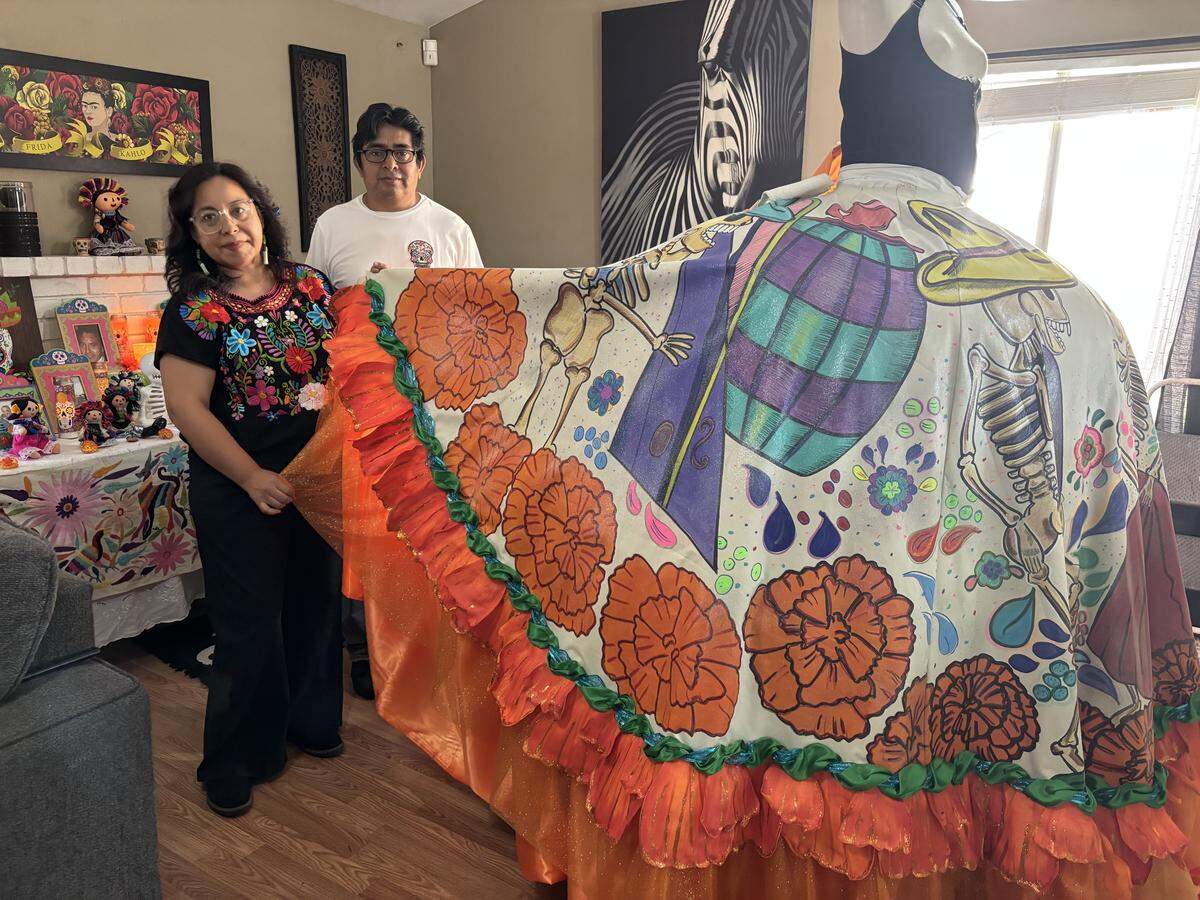
Valencia, who is known in the Central Valley as La Catrina de Visalia, has educated local communities about Day of the Dead for more than a decade through school visits and cultural events in which she dresses in the grand, colorful dresses that she creates herself with the help of her husband.
“I feel very proud to embody La Catrina,” Valencia said, clarifying that it’s not a costume. “It’s a respect I have for this beautiful character and everything she represents.”
Today, La Catrina is a central figure in Day of the Dead celebrations, often appearing on sugar skulls and costumes. The figure, originally created by illustrator José Guadalupe Posada, achieved international recognition thanks to the work of artist Diego Rivera and the influence of Mexican muralists.
The tradition of the Mexican cultural figure La Catrina has expanded nationally and internationally to countries like Japan and France, Valencia said.
.JPG "La Catrina de Visalia Consulado de Mexico en Fresno (4).JPG")
Valencia said becoming La Catrina was born out of love for her native country Mexico, its culture, and the desire to let her children and new generations in the United States know “where we come from, to know our roots.”
Valencia recalls that her first dress more than a decade ago was a simple burgundy and black dress with heels. At that time she did not wear stilts as she does now.
“But then I saw the grandeur that La Catrina embodies in this tradition, the most representative icon of the Day of the Dead traditions,” Valencia said in Spanish. “So, I said, La Catrina must be grand, beautiful, elegant, colorful, spectacular. That’s why I think we put so much effort into making La Catrina’s dress every year. With that love and respect, we wear the dress of La Catrina de Visalia.”
.JPG "FRS_FRS-MOB La Catrina de Visalia-10-21-25_MOB (14).JPG")
Each year, Valencia changes the dress to keep things fresh, using different elements and cultural themes such as Quetzalcoatl, Alebrijes, and Posada’s original La Catrina, La Garbancera, she said.
Valencia said the creative process was quick and easy for this past year’s Day of the Dead. She designed a dress with a large marigold flower on the back
“And as the dress came together, the ideas started flowing,” she said. .”
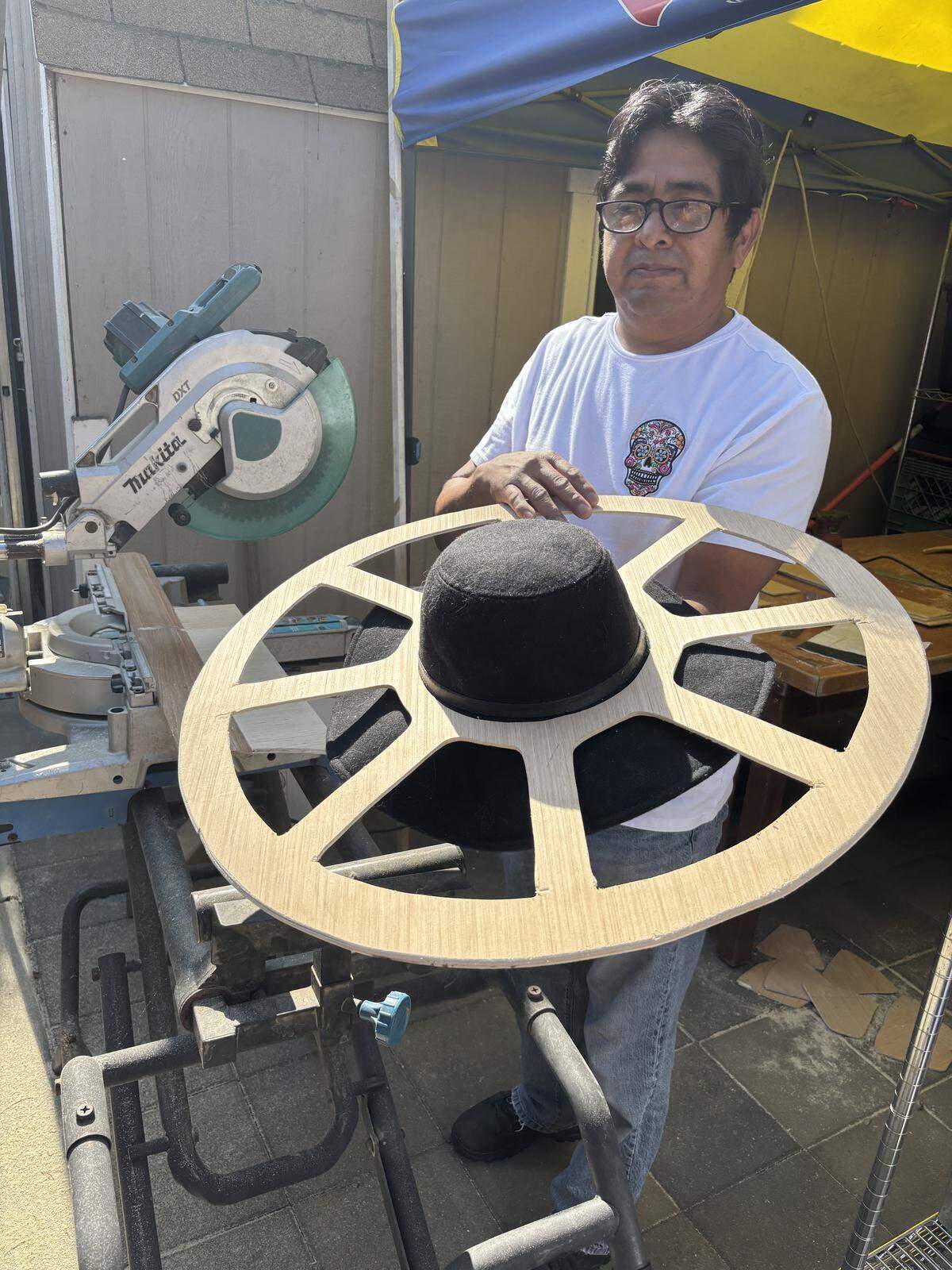
The dress included a hat made by her husband, Claudio Martínez, who has been a key part of all the creations of La Catrina’s dresses.
“He is my support in making all this magic possible,” Valencia said.
She and her husband have created 14 dresses, some of which weighed more than 45 pounds.
.JPG "FRS_FRS-MOB La Catrina de Visalia-10-21-25_MOB (5).JPG")
To bring La Catrina to life, Valencia uses stilts to be able to showcase the grandeur of the dresses. She can measure up to 8 feet tall with the hat on. At first, she had to practice for months walking down her street on stilts before wearing them with the dress.
“I’m very short, so I use stilts,” Valencia said.
Martínez said they have several stilts of different weights and heights for Valencia to use.
“Some are two feet tall,” Martínez said.
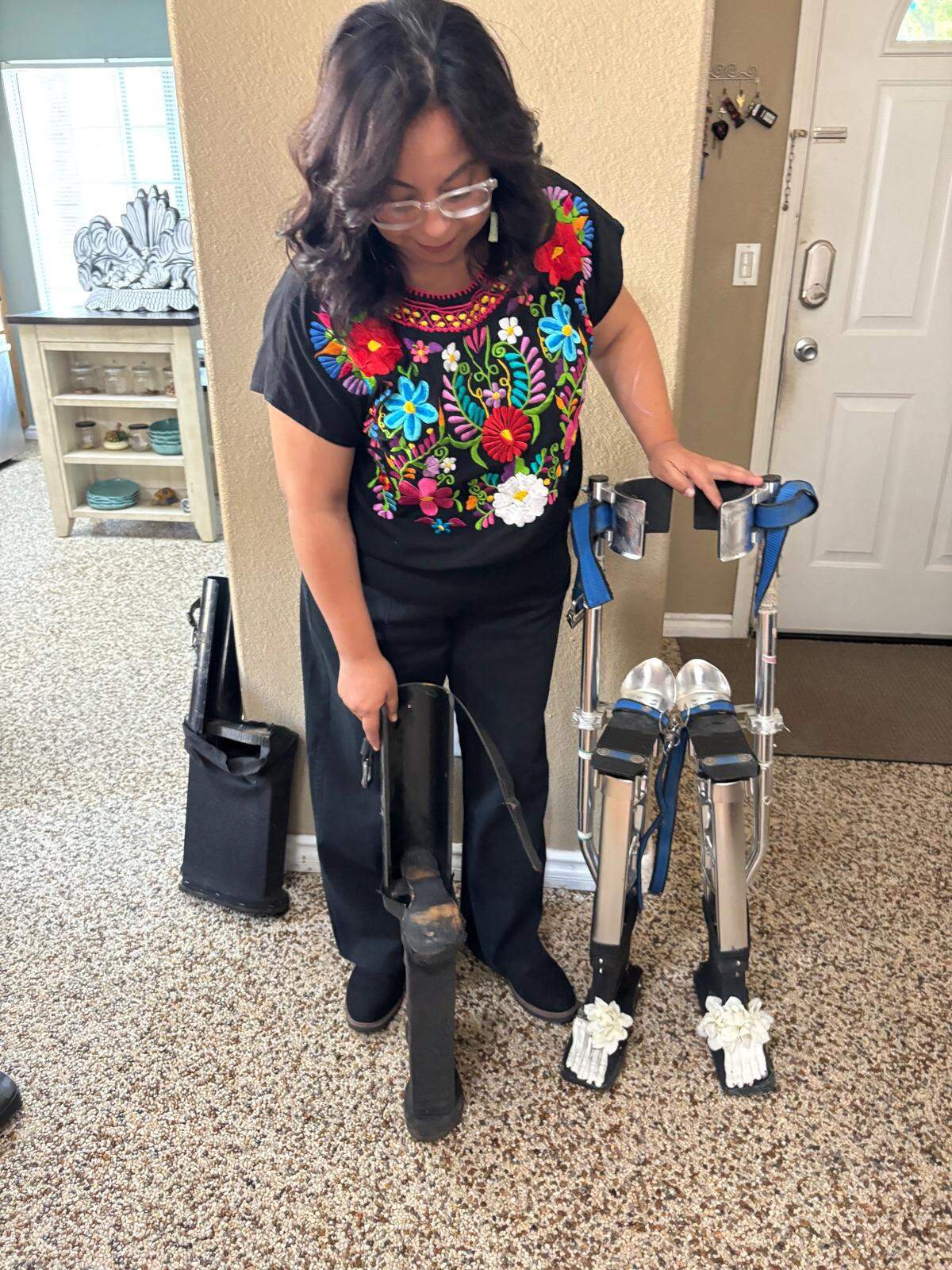
Martínez said everything they design for La Catrina’s dress, they keep in mind the weight, how it will be transported to the event, how to remove it quickly, and how La Catrina can enter the event without problems.
“We never thought La Catrina would grow so much,” Valencia said.
.JPG "FRS_FRS-MOB La Catrina de Visalia-10-21-25_MOB (11).JPG")
Seeing people’s reactions when they see La Catrina de Visalia makes all the hours of work she invests in creating the dresses each year worthwhile, Valencia said.
For Valencia, it is important to transmit Mexican culture through La Catrina, from presentations in schools to cultural events in Valley, sometimes several events in a single day. .
Valencia recycled the first few dresses of La Catrina. But now she keeps all the dresses she has created because there are plans to exhibit those dresses in a museum in the Valley sometime in the future.
“These are priceless, sentimental experiences,” she said.
.JPG "La Catrina de Visalia Consulado de Mexico en Fresno (3).JPG")
.JPG "FRS_FRS-MOB La Catrina de Visalia-10-21-25_MOB (17).JPG")
.JPG "FRS_Catrina Leti IMG_2238 (1).JPG")
.JPG "FRS_La Catrina de Visalia Consulado de Mexico en Fresno (3).JPG")
.JPG "FRS_FRS-MOB La Catrina de Visalia-10-21-25_MOB (16).JPG")
.JPG "FRS_FRS-MOB La Catrina de Visalia-10-21-25_MOB (6).JPG")