
Can California’s battery storage industry survive Moss Landing fire? It better | Opinion
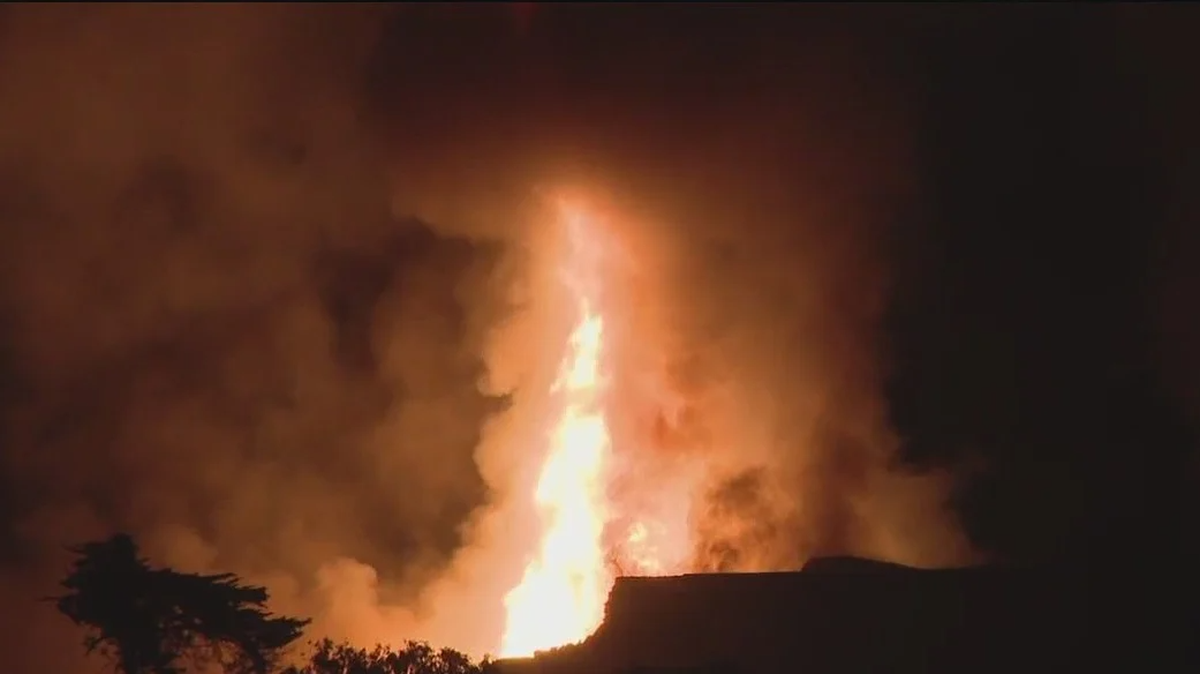
The massive lithium battery fire at Moss Landing confirmed the worst fears of many Californians — including many Morro Bay residents who have been fighting for years to stop a similar project proposed in their beach community.
Unfortunately, the Jan. 16 fire that destroyed a portion of Vistra Energy’s battery storage facility didn’t tarnish just one company. It was a black mark against the entire industry, and it could make it difficult to site new battery farms in California.
That may be unfair, given that the vast majority of energy storage systems in the U.S. have been operating safely. Yet dramatic photos of flames leaping from a building that housed 100,000 battery modules do not inspire confidence. Nor does the evacuation of 1,200 residents who have lingering doubts about the safety of air and water supplies, despite EPA assurances that there was no release of toxic materials. Nor does the fact that this was the fourth fire at the Moss Landing power station.
In the popular beach community of Morro Bay, any remaining goodwill for Vistra’s project has gone up in a cloud of smoke.
Although the proposed new plant would use a different battery configuration and newer technology, it’s hard to trust the company that repeatedly assured the community there would be adequate safety measures in place to prevent accidents. It also shared a report that concluded that even if there were a fire, residents would not be exposed to any health risk.
Who can believe such statements now?
According to a company spokesperson, Vistra has put its application for the Morro Bay project on pause.
“Pause” sounds overly optimistic.
Much as we support battery storage as a key to California’s transition from fossil fuels, Vistra would be well-advised to abandon the Morro Bay project altogether, or at least put it on the shelf for a decade or two and allow battery technology to evolve.
Governor wants investigation
Gov. Gavin Newsom, among others, is calling for the California Utilities Commission to conduct an investigation.
Of course it should. There must be a thorough, independent, transparent investigation to pinpoint the cause of the fire.
Was it a flaw that might exist at other battery farms? Or did conditions at this particular facility made it especially vulnerable?
That could be the case, since the design at Moss Landing is unusual. Battery modules are stacked inside a building rather than outdoors, as they are at most plants.
During a recent board meeting, Monterey County Supervisor Luis Alejo said he toured the facility in 2023. “Many of these battery units were much closer, from my recollection, to each other than what we see outside.”
Experts have speculated that if the indoor modules lacked adequate separation, it would have made it easier for the fire to spread.
Either way, the future of Vistra — one of the nation’s largest energy companies — is on the line, at least in California.
Assemblywoman Dawn Addis, a former Morro Bay city councilmember, is calling on Vistra to abandon the Morro Bay project. She’s also introduced a bill that would restore the ability of local governments to decide whether to permit new battery storage plants. (Under current law, energy companies can bypass local government and go straight to the California Energy Commission for a permit.)
The Monterey County Board of Supervisors voted Tuesday to explore avenues to prevent Vista and PG&E, which also has a battery storage system at Moss Landing, from ever bringing the systems back online.
One Monterey County supervisor went so far as to compare the incident to the partial meltdown at the Three Mile Island nuclear power plant in 1979.
The one sector that does not seem perturbed is Wall Street; analysts actually upgraded the value of Vistra stock after the fire.
“... The quick containment of the fire and the proactive measures taken by the company to assess and address the damage have provided some reassurance to investors and analysts alike,” a BMO Captial analyst told the website Investing.com.
Changing technology
It’s not just Vistra that’s under the microscope.
There is renewed focus on the lithium-ion batteries used in energy storage. The batteries are prone to catch fire, and when they do, the fires are hard to extinguish and can release hazardous gases. That explains why airlines do not allow lithium batteries in checked luggage.
However, not all lithium-ion batteries are created equal. The ones that caught fire in the Vistra plant were an older generation, dating back to 2020, while the newer battery packs use safer chemistry.
More advances are coming, and other types of systems — including ones that do not use lithium-ion batteries — are in development.
The California Department of Energy has allocated over $270 million to fund grants for development and construction of long-duration energy storage projects that do not use lithium-ion batteries.
The Sacramento Utility District, for example, was awarded $10 million for an iron-flow battery system that stores energy in external tanks of liquid electrolyte.
“The electrolyte solution in iron-flow batteries ... has a pH comparable to wine, and the batteries pose no risk of combustion. Furthermore, the materials used are highly recyclable,” according to the Environmental and Energy Study Institute, a nonprofit based in Washington, D.C.
Sodium-ion batteries are another alternative. Sodium is much easier to source than lithium and less expensive. Sodium batteries also are less likely to overheat and catch fire.
Can confidence be restored?
We cannot abandon energy storage — not if we expect to meet clean energy goals. Wind and solar are part of the solution, but we must have battery storage for those times when the wind isn’t blowing and the sun isn’t shining.
Otherwise, the climate crisis — the drought, the weather extremes, the firestorms like those that devastated the Los Angeles area — will only get worse and endanger far more Californians.
But as much as we need battery storage, communities should not be put in harm’s way.
The California Public Utilities Commission must step up and determine what went wrong at Moss Landing and use what it learns to prevent future accidents.
It must demand strict adherence to all safety regulations.
And it must push the industry to take advantage of rapidly improving technology by phasing out obsolete battery systems and replacing them with newer, safer models.
Confidence in the battery storage industry must be restored, because there is too much at stake to let it fall victim to a statewide wave of energy NIMBYism.
While it’s understandable that communities like Morro Bay would resist allowing a battery farm in environmentally sensitive and/or highly populated areas, we must remain open to finding appropriate locations.
The Moss Landing fire should be a catalyst that results in more selective siting, better safeguards and improved oversight — not an excuse used to impede an industry so critical to California’s future.
This story was originally published January 26, 2025 at 5:00 AM with the headline "Can California’s battery storage industry survive Moss Landing fire? It better | Opinion."