
Fresno County elections chief under fire for decision over Measure C voter guide argument
This story was originally published by Fresnoland, a nonprofit news organization dedicated to making policy public.
Fresno County voters may not get a chance to consider a “strong” opposition argument against Measure C on this fall’s ballot unless a stalemate is resolved between the county’s election chief and groups including the local Libertarian Party and a coalition of local leaders opposed to Measure C.
The community groups are threatening a lawsuit and insist that James Kus, the county clerk and registrar of voters, replaces the argument he chose to represent opposition to Measure C in favor of a more mainstream viewpoint crafted by the coalition which has been integral to the whole debate over the last two years.
At the heart of the conflict is Kus’ decision to use the argument submitted by the Libertarian party because it arrived before the alternative from the coalition.
Kus had to decide which of the arguments to print by Aug. 29, as the state election code 9166 requires that only one argument for and against each measure appear on the ballot. The state code does not, however, provide any guidelines for the selection between two opposition groups except for cases where the county Board of Supervisors is directly involved.
Kus chose to select ballot arguments on a first-come, first-serve basis, deciding that whichever arrived at his office first would be on Fresno County’s November elections ballot.
“I just said, ‘Well, which one came in first?’” Kus said, adding that in the case of Measure C, he did not read the ballot arguments before deciding.
“If I had read the arguments, it would bias me,” he said. “I approached this to be as far from being biased as possible.”
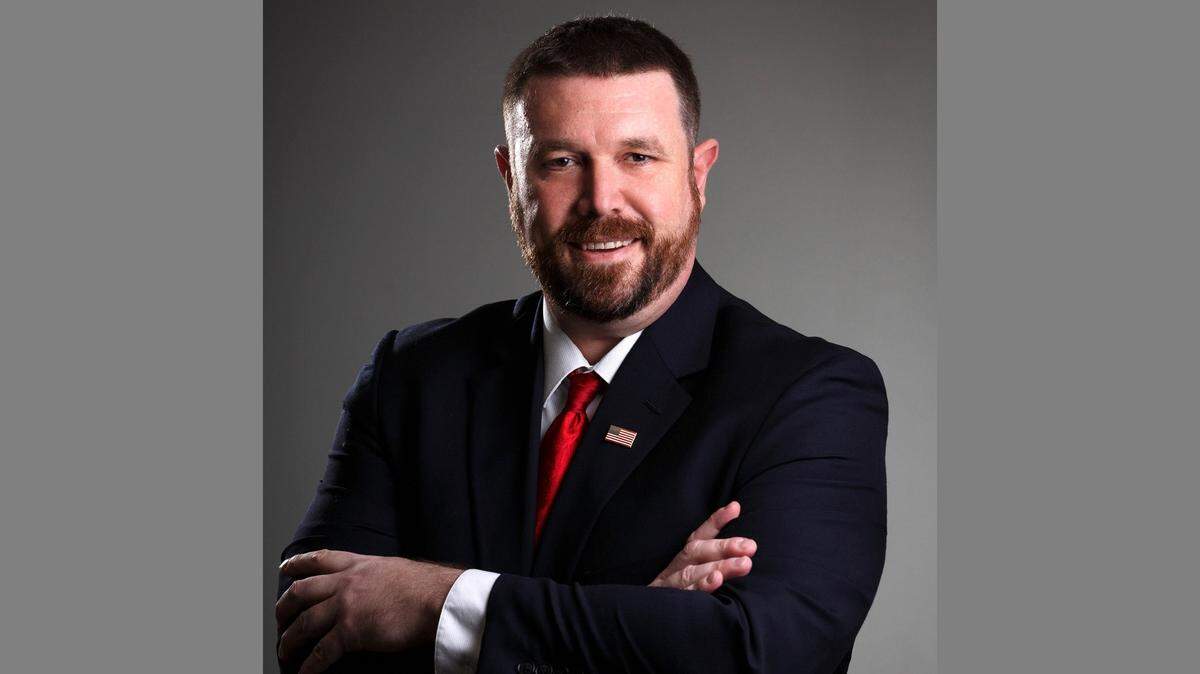
Many elections experts, including former Fresno County election clerks and an elections analyst, disagree with Kus’ decision.
They say that while it’s admirable to try to appear unbiased, especially in a time when election clerks are facing political pressure across the country, Kus missed an opportunity to keep voters informed while ensuring that minority groups are given a voice on the ballot.
They cite Kus’ lack of clear protocol and transparency at the time of his decision, which they say called for him to make a strategic judgment that could have taken into consideration how topical, relevant, or novel each potential ballot argument was.
In an interview with Fresnoland, Kus said he does not have an obligation as an election official to use his discretion to provide specific, helpful and factual information in ballot arguments to Fresno County voters.
“That is just not something you want your government doing for you,” Kus said.
Many disagree, arguing that there’s too much at stake in Measure C’s massive spending plan, and Kus should have given the issue more consideration. Fresno County’s nearly $7 billion transportation sales tax could set the San Joaquin Valley’s regional priorities for public transit, highway development, road repair, and climate change for decades to come.
Even the authors of the argument selected by Kus agree that the other argument should be on the ballot. The Libertarians asked Kus on Wednesday morning if they could withdraw their ballot argument, but Kus declined, citing another election code.
“We’re on the same side as them (the coalition). They had a strong argument that they submitted,” said Kathryn McElroy, a member of the Fresno County Libertarian Party.
“We weren’t looking to preempt anybody. We just wanted to make sure there was at least one argument against (Measure C).”
Who’s for, against Measure C
If there’s no change by the time voter guides are printed, Measure C sides will look like this:
Proponents: Written by a well-known coalition including Fresno Mayor Jerry Dyer, Fresno County Sheriff Margaret Mims and Henry R. Perea, former county supervisor who is currently on the board of California’s High Speed Rail Authority.
Opponents: Written by Honor “Mimi” Robson and McElroy, state and local Libertarian Party members.
Critics say that the argument by Libertarian Party members is problematic for several reasons, including that it sounds like an angry spam mail message; it does not discuss transportation policy; and is identical to every rebuttal against a local sales tax on Fresno County’s ballot this year, Measures C, E, J, K, M, H and X.
“How much election cheating are you willing to put up with?” the Libertarian ballot argument reads.
“Are these public officials corrupt? All of them?...It’s almost like it’s a conspiracy. Because the public officials (county supervisors) who start the ballot rolling, violate every meaningful law with the knowledge, apparently, that all the other public officials will go along with their corruption.”
All seven of Fresno County’s ballot measures which include an opposition argument contain the same verbatim argument, which questions the basic legality of all local sales tax on the ballot and claims that all public officials do not follow the rule of law.
“Our purpose in submitting arguments against all the ballot measures like we did was to make sure there was an argument against every measure,” McElroy said. “In all of the other cases (except for Measure C), there were no other arguments submitted against, so it was really important to us to make sure that there’s actually a debate going on for the voters to make their decisions.”
But another argument submitted against Measure C’s renewal this fall was written by the coalition that includes Nor Cal Carpenters Union and Carpenters Local 701; Juan Arambula, a former state assemblymember; Luisa Medina, a former Fresno city planning commissioner; Sandra Celedon, the CEO of Fresno Building Healthy Communities; and Youth Environmentally Savvy, a youth group.
Documents given to Fresnoland show that the coalition argued that the Measure C plan does not do enough to battle inflation or improve local job programs, public transit, or safe routes to schools. Recent reporting by Fresnoland shows that these points are long-standing criticisms raised by hundreds of community members about the multi-billion dollar spending plan over the last several months.
The November vote is to extend Measure C to 2057. The current tax runs through 2027.
Election chief’s choice ‘defies any legal application’
“While it’s understandable that the elections office wants to appear as unbiased as possible, it also has an interest in providing the public with good and useful information,” said Jonathan Mehta Stein, executive director of California Common Cause, a nonprofit that focuses on voting rights and government transparency in local elections.
“If one of the arguments is already available multiple times elsewhere on the ballot, that suggests that the elections officer can use his discretion to provide something more useful and topical for voters on other measures,” he said.
Susan Anderson, Fresno County elections clerk from 1990 to 2000, said that Kus’ decision sets a “bad precedent.”
“I don’t agree with the idea that you should take the first one that came in, if they all came in within the deadline,” said Anderson, who supports Measure C’s renewal this fall. “That’s not what the law says.”
She added, “if one of the arguments is not making an argument directly about the measure, that seems to me like that should be a consideration.”
Victor Salazar, who was Fresno County’s election clerk from 2001 to 2011, said Kus’ first-come, first-serve decision “defies any legal application, because that’s why we have deadlines.”
“It’s not who gets there first, whether it be in any form of legal action,” Salazar added. “It’s always: You have a deadline, and then you weigh them on merit, not on who’s the first to get in the door.”
Main Measure C opposition group ‘can’t even get a word in’
Juan Arambula said the coalition, which will likely raise hundreds of thousands of dollars this fall in its attempt to defeat Measure C’s renewal this November, believes Kus “abused his discretion” when he decided to reject the group’s opposition statement.
“Whether it’s global warming or air pollution, there are lots of things that are going to be impacted by this transportation measure. And we think that it’s only appropriate to give both sides of the argument,” Arambula said.
“We have the proponents trying to pass a nearly $7 billion tax proposal over a 30-year period, and we can’t even get a word in,” Arambula said. “You would think he (Kus) would read the ballot arguments instead of just trying to figure out what is least harmful to him.”
Arambula said that the coalition had multiple communications with Kus in the weeks before the Aug. 29 argument submission deadline, but Kus never informed the coalition about any potential complications stemming from the Libertarian opposition submission.
“He never said anything about, ‘Well, it’s too bad because another one came in first,’” Arambula said.
Official timestamps from documents given to Fresnoland indicate that the ballot argument conflict existed for at least a week leading up to the Aug. 29 deadline.
Arambula said the coalition was informed about the conflict only when it was too late to do anything about it.
Another way to pick voter guide arguments
In the future, Kus said, he will randomly pick the argument to present to voters in the case of multiple ballot arguments being presented.
Other counties in California have different methods for picking voter guide arguments. For example, Contra Costa County election code says that the election clerk may “include consideration of grammar, spelling, coherence, tone, and the comprehensiveness of the argument” to choose between competing arguments.
Stein of California Common Cause said a new policy, like Contra Costa County’s, needs to be put in place in Fresno County.
”I think that this office needs to have some sort of process like the Contra Costa approach,” he said, “but I’m really sympathetic to elections officials who in this moment want to appear as unbiased as they possibly can.”
For now in Fresno County, the apparent deadline to resolve the Measure C issue is Sept. 9, the date Kus said ballot guides will go to the printer ahead of the Sept. 29 mailing date.