
Did ICE derail the prosecution of a violent Fresno crime?
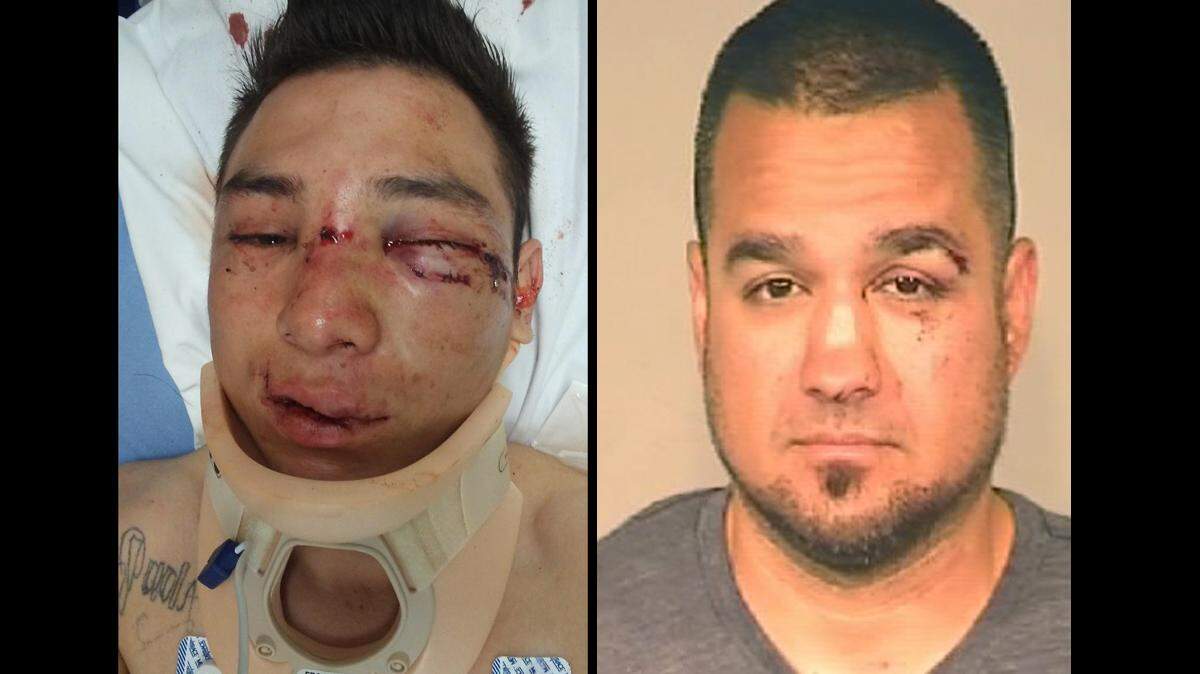
Omar Hernandez Huerta was beaten to a bloody pulp as he got out of his car in Fresno. His brother, Cesar, remembers receiving a grisly photo of his brother's barely recognizable face – eyes swollen shut, a broken bone in his face, his neck in a brace.
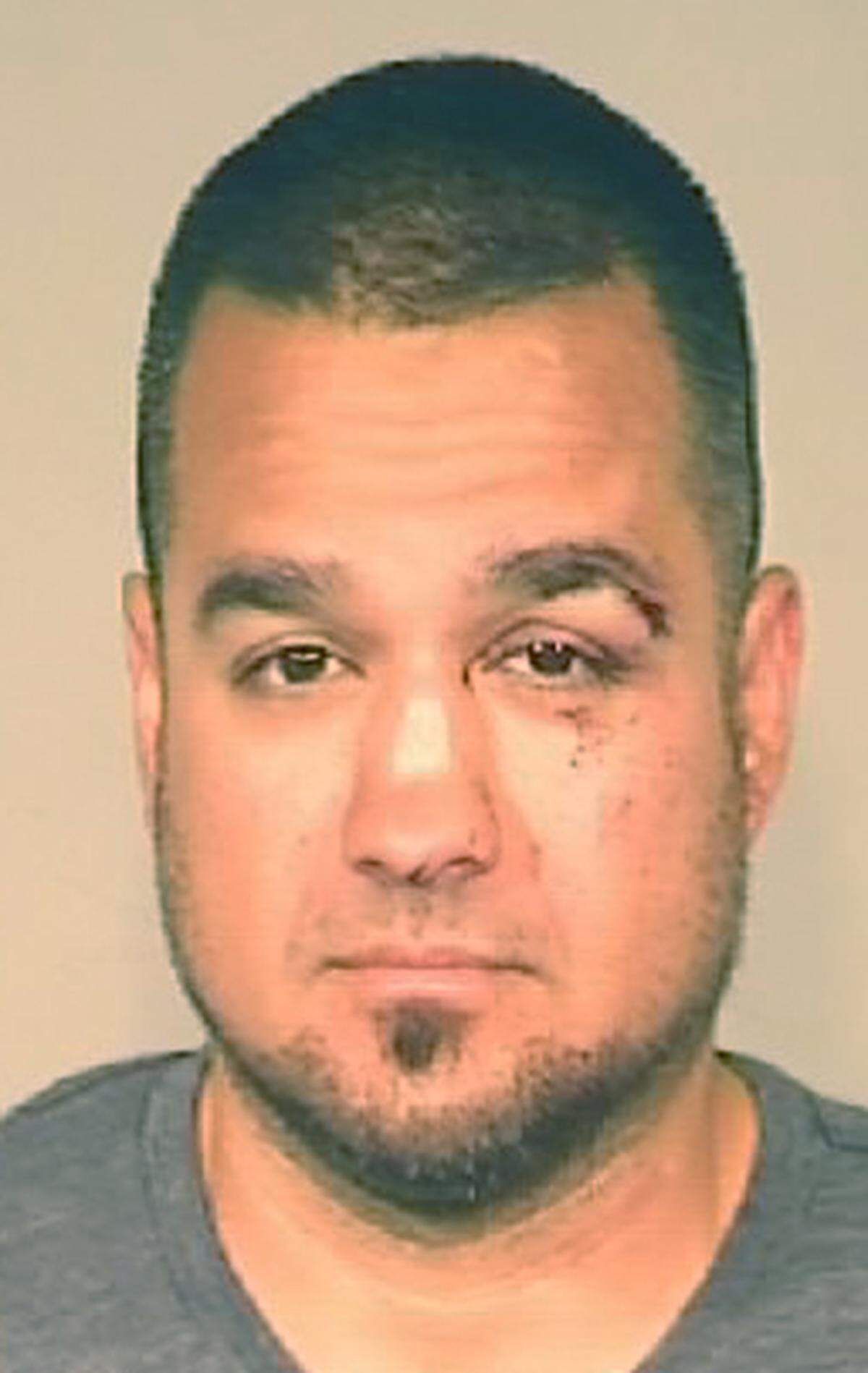
Huerta's attacker, Robert Salvador Marquez, was arrested that same day and charged with several felonies. If convicted of the June 10 assault, he faced several years in prison – a fate Omar Huerta was happy to help ensure with his testimony.
There was one problem: Huerta was stuck inside a U.S. Immigration and Customs Enforcement facility in Bakersfield. Shortly after Marquez's arrest, Huerta was arrested during a well-intentioned 911 call made by his parents and then released from the Fresno County Jail when no charges were filed.
ICE agents were waiting for him.
What happened in the months that followed depends on who you ask. Two things are clear: Huerta, a 23-year-old farmworker with a baby on the way and a troubled past, was deported Feb. 9 . And Marquez, the man who put him in the hospital, will begin serving a two-month sentence Monday in the county's work program.
ICE maintains it deported an undocumented immigrant with a criminal history. But Huerta's attorney, Nathan Brown, says the federal agency hindered the prosecution of a violent Fresno criminal by barring his client from having his day in court.
Brown contends ICE prevented Huerta from testifying in order to expedite his deportation. Had Huerta been allowed to cooperate, he might have qualified for a special visa that allowed him to stay in the United States legally.
"It's unbelievably hypocritical for ICE to hyperventilate about local law enforcement not helping them," Brown said in reference to California's sanctuary state rules, "when they are actually getting in the way of local law enforcement."
Brown believes Huerta's treatment was part of a larger statewide crackdown that has included widespread arrests throughout California. He contends ICE is hellbent on deporting any undocumented immigrant it can find – no matter the circumstances.
The court case
According to Fresno County court records, Marquez pleaded not guilty July 25 to assault by means likely to produce great bodily injury, felony battery and misdemeanor battery charges.
Deputy District Attorney Vanessa Wong contacted Brown through email Oct. 19. She asked if he could get Huerta to a hearing in Fresno Superior Court on Nov. 17. Brown said Huerta would be happy to testify, but ICE had not responded to his requests for transport.
The conversation continued, Brown said, but neither attorney was able to get a response from ICE. On Oct. 25, Wong's office served Huerta with a subpoena compelling him to appear.
On Nov. 3, Wong asked Judge Brian Alvarez to sign an order to transport Huerta, who was listed in court records as being in federal custody, to the courthouse . On Nov. 15, the judge ordered the Fresno County Sheriff's Office to retrieve Huerta.

But Brown said the transport never took place. He assumes Fresno County Superior Court had no authority to order a federal agency to allow the transport.
At the Nov. 17 hearing, Wong asked for and was granted a continuance. When the prosecution and Marquez next met Dec. 1, the two sides had agreed to the plea deal.
Assistant District Attorney Steve Wright said he couldn't discuss the specifics of the Marquez deal, but offered this statement:
"For the preliminary hearing, my (deputy district attorney) did what she could to secure the attendance of the complaining witness by attempting to subpoena him to be present for the hearing. He was not transported to court and did not appear. The fact that he was not present to testify was but one factor that was considered in our decision to resolve the case by way of a plea."
On Jan. 5, Alvarez sentenced Marquez to 180 days in jail, with 120 of those days suspended provided Marquez completes 60 days in the county work program. He also will be on probation for two years.
The deportation
Brown believes cooperating with law enforcement and testifying in court were Huerta's only real chance of staying in the U.S. legally. It could have qualified him for a U Visa, which allows victims of violent crime who have suffered significant injury or abuse to stay in the country temporarily.
However, because Huerta had a criminal history, Brown would have needed to secure a special waiver for Huerta to even apply for the visa. Brown noted he already had received a letter of support for Huerta from the Fresno Police Department because he had cooperated with investigators.
Huerta's two convictions came in 2016, when he was convicted of driving under the influence in February and of felony robbery in May, Brown said.
Cesar Huerta said his brother had made strides to stay out of trouble, and had jettisoned old friends who were "bad influences." The brothers worked in the fields together every day. Omar Huerta had a new steady girlfriend, Anna Gomez. The two brothers and their parents came to the U.S. in 2005 from Mexico City and wound up in Fresno, where they shared a home.
But on July 23, Cesar Huerta said, one of his brother's old friends came to the family's home to play soccer. The parents begged Omar Huerta not to hang out with the man, who Cesar Huerta said was clearly drunk. They eventually called 911, and Fresno police arrived. An argument that took place between police, Omar Huerta and the friend ultimately led to Omar Huerta's arrest.
The police did not pursue charges against him, and he was released July 24. ICE picked him up as he left the jail.
ICE keeps careful tabs on the Fresno County Jail log, checking the immigration status of whoever they believe might be undocumented. The jail log notes these immigration holds, though the Fresno County Sheriff's Office insists it no longer holds inmates for ICE past their confinement term. Recent case law in California has determined local law enforcement cannot do this.
Huerta was taken to ICE's office on L Street in downtown Fresno and later transferred to a detention facility in Bakersfield. Brown explained that ICE can hold a undocumented person if the agency believes he or she presents a danger to the community. It used Huerta's convictions and recent arrest to convince an immigration judge he was exactly that.
Brown attempted to make Huerta's case at a follow-up immigration hearing Jan. 25. Huera had married Gomez – a U.S. citizen – and the two were expecting a daughter. Huerta also has a 1-year-old daughter from a previous marriage. Brown pointed out that Huerta had lived here most of his life, and his latest arrest had not led to any charges.
But by then, the Marquez case had been settled without Huerta's testimony. Huerta's request to stay in the country was denied, and he was deported Feb. 9.
The Bee shared Brown's accusations against ICE with the agency. Spokesman James Schwab provided this statement:
"Mr. Huerta entered the U.S. unlawfully in December 2005. Following his immigration proceedings, an immigration judge ordered him removed. Mr. Huerta was removed to his native country of Mexico on Feb. 9. Mr. Huerta’s criminal history includes a conviction for DUI and a felony conviction for robbery."
The future
Huerta is out of options, Brown said. He will not be allowed to enter the United States for at least 10 years.
Cesar Huerta said his brother is living in Mexico City – a city he left when he was 11. Omar Huerta doesn't know anyone there. All of his immediate family lives in Fresno.
Gomez said the stress of Huerta's deportation proceedings and subsequent absence has harmed their unborn daughter, who was failing to gain weight in utero. The baby is due this month. Right now, the plan is for Gomez to visit Huerta soon and stay for a few months. She does not plan to move to Mexico.
Huerta's deportation has been hard on his parents, who are heartbroken that they inadvertently caused it by calling police in July.
"My mom doesn't know what to do," Cesar Huerta said, using Brown as an interpreter. "You could see that he was changing his life. He had distanced himself from bad friends. He wanted to do better."
This story was originally published March 9, 2018 at 10:52 AM with the headline "Did ICE derail the prosecution of a violent Fresno crime?."